The season · Seasonal Edits
Three Linen Shirts Compared by Weight and Collar Construction
Three linen shirts compared on published fiber, weave, weight and collar construction, with notes on fit, shrinkage and what the labels leave out.
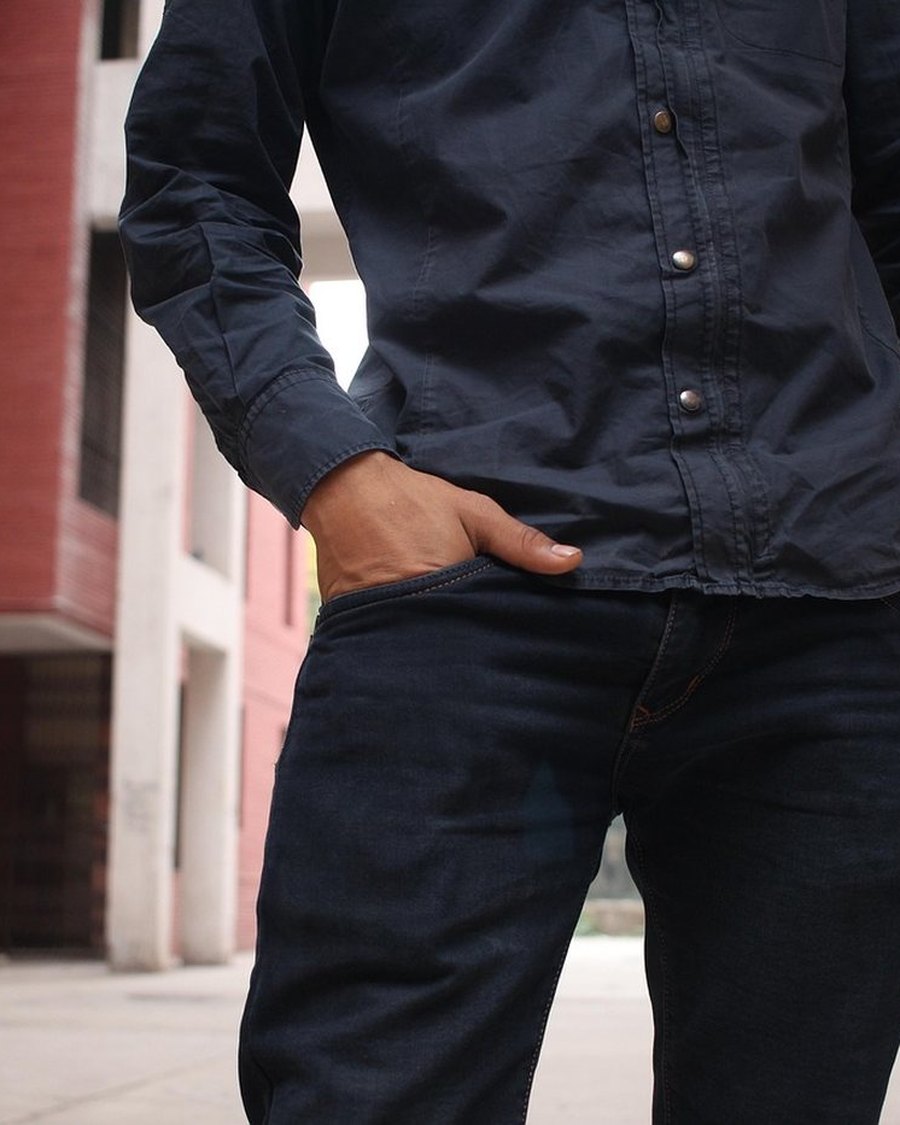
A linen shirt is sold on the idea of it, not on its numbers. The page gives the fiber and the fit, then stops at the two things that decide whether the shirt survives a summer: the weight of the cloth and the way the collar is built. Three shirts at USD 42, USD 49.90 and USD 66 make the gap visible, and the gap is less about quality than a set of decisions the labels leave off.
What the labels publish, and what they do not
All three state 100% linen, and all three name a flax origin. Quince cites European flax and OEKO-TEX Standard 100 certification, listed as certificate BJ015 226317. Uniqlo cites European-grown flax. Everlane cites European Flax linen and names the factory, Poong In in Vietnam, which is a level of disclosure most brands at this price avoid.
Then the page stops. None publishes a weight in grams per square meter, and none states whether the collar carries a fused interlining, a sewn one, or a single layer of self cloth. Those are the two figures a hand reads first, and they are the two that decide how the shirt wears in its second summer rather than its first.
The comparison below keeps “not published” in those cells. A blank is information: it tells you the brand either does not know the number or does not want it compared, and either answer changes how much of the purchase can be decided from a desk.
Why weight is the number nobody prints
Fabric weight is measured, not estimated. A circular cutter takes a sample of known area from the piece, the sample is conditioned and weighed, and the result is scaled to grams per square meter. A mill holds that number for every roll it ships, because cloth is sold by it. The brand has the figure before the first sample is sewn.
It stays off the page because it invites comparison the brand cannot control. “Lightweight linen” covers 120 gsm and 165 gsm equally well; a number would separate the two and make one shirt look like less cloth for more money. The adjective survives the audit. The figure would not.
Weight decides four things at once. It sets how much of the body reads through the cloth in daylight, how large the creases run, whether a collar can stand with a light interlining, and how the shirt behaves under a jacket. Heavier linen folds into broad creases and hangs away from the ribs. Lighter linen creases into fine lines and follows the body, which is cooler in dry heat and less forgiving in humidity.
There is a test that gets close without a cutter. Hold the shirt against a window: if the outline of a hand is legible through two layers, the cloth is light enough that a white version will need an undershirt. Weigh two shirts of the same size on a kitchen scale and the difference in grams is the difference the pages did not print.
The pre-washed shirt: Quince
Quince sells the 100% European Linen Long Sleeve Shirt at USD 42, in a relaxed fit, OEKO-TEX Standard 100 certified and pre-washed.
Pre-washing is a wet finish applied before the cloth is cut. It costs a wash cycle, some yardage and most of the papery surface that people associate with new linen. What it buys is a shirt that has already made its first move: the warp yarns have straightened, the cloth has settled to its finished length, and the pattern was laid on the settled cloth rather than on the loom-state one.
The trade is hand. A pre-washed linen feels soft and slightly worn from the first wear, which suits an open shirt over a tee and works against a collar that is expected to stand at a wedding. Care is machine wash cold on a gentle cycle, tumble dry low and remove promptly, the same instruction the other two give and one that matters more here, because this shirt has already been through the process once.
The closer weave: Uniqlo
The Premium Linen Shirt is USD 49.90 at Uniqlo, in 100% linen from European-grown flax, described on the page as cool with a supple texture and a subtle glossy sheen.
That sheen is a reading of the cloth rather than a finish applied to it. It comes from finer yarn and a closer sett, so more of the surface reflects light and the slubs sit smaller and flatter. A close sett changes behavior in three places. The collar holds flatter for longer because there is less give across the interlining. The cloth passes less air, which makes it marginally warmer in still heat. And it creases in finer lines that read as a pressed shirt rather than a rumpled one.
The failure is the hot afternoon. A close weave moves less air than an open one, so the shirt that looks best in an air-conditioned office is the one that feels damp on a station platform in August. The collar is a standard point rather than a button-down, which limits the styling to tucked or open at the neck and rules out wearing it closed under a crew neck.
The relaxed cut: Everlane
The Must-Have Shirt in Linen is USD 66 at Everlane, in 100% European Flax linen, cut with a relaxed body and a regular length and made at Poong In in Vietnam.
The cut is the argument. A relaxed body sits away from the torso, and a regular length ends near the hip bone rather than below it, so the shirt can be worn out over a tee without reading as a tunic, or tucked without a wall of fabric at the waistband. Of the three it is the easiest to wear open as a light layer, and the one whose fit is least dependent on the rest of the outfit.
It is also the least specific. No weight, no yarn count, only a description of lightweight linen. A buyer comparing on numbers has nothing to compare, so this shirt has to be judged on the hand, the shoulder width and the length from the back of the neck, all of which are read off a size chart rather than described in the listing.
Collar construction, the unlisted spec
A linen collar stands because of three things: the interlining between the two plies of collar cloth, the height of the band that wraps the neck, and the weight of the linen itself. Heavy cloth needs less help from the interlining; light cloth needs more and often gets less, because a heavy fusible on a light linen is exactly where bubbling starts.
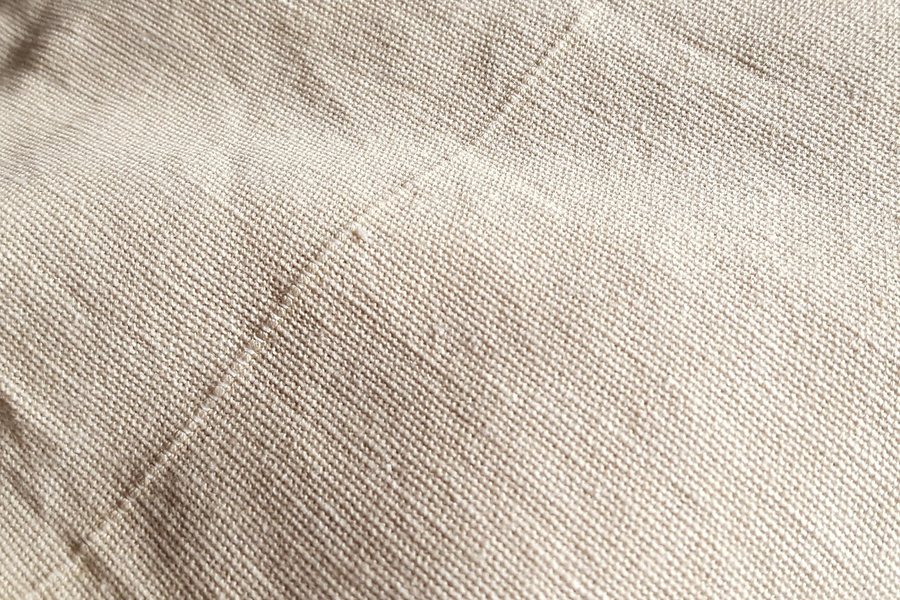
Fusing is the fast method. A resin-coated interlining is pressed into the collar with heat, which holds a crisp edge and takes minutes rather than the sewing a stitched interlining requires. On linen it can fail in the wash, because the flax and the fusible shrink at different rates and the surface separates into small blisters along the fold. A sewn interlining is softer, slower to make and does not delaminate.
The test at the rail takes five seconds. Pinch a collar point between finger and thumb and release it: one with enough body springs back, one that holds the crease has a light interlining or none and will flatten further with washing. Then look at the band height, because a shallow band will not stand against the neck whatever the interlining weighs.
Where linen shrinks, and why it is length first
Linen is woven under tension. The warp ends are held straight and parallel on the loom, and when the cloth is wetted they relax and the cloth contracts along its length. The weft is under less tension, so the width moves less. That is why a linen shirt that has shrunk still fits across the chest and no longer covers the wrist bone.
Pre-washing takes most of that out. What remains is the part heat can still reach, which is why all three sets of care instructions say cold wash and low tumble. A hot dryer drives the residual shrink unevenly: seams and hems hold more water than a single panel, so they are still contracting after the flat cloth has settled, and that is how a shirt ends up with a puckered placket and a sleeve an inch short of where it started.
The check at purchase is the seam, not the label. Lay the shirt flat and look at the side seam: one that ripples was sewn under tension and will pucker after the first wash. A placket that bows away from the buttons has the same problem, and both are visible before the shirt is paid for.
The failure cases
Humidity is where the two weaves part company. Linen takes up moisture from the air, so a light shirt that hung crisply in dry heat goes limp and clings at the shoulder, while a closer sett such as the Uniqlo holds its line longer at the cost of moving less air.
Sheerness is the second. White linen at the lighter end is semi-sheer in daylight, and an undershirt shows as a second shoulder line. A heavier cloth solves it at the cost of warmth; a skin-tone undershirt solves it for less money and is the better answer if the shirt is otherwise right.
The third is the office. A relaxed linen shirt under a blazer bunches at the armhole unless the shirt armhole is cut high, and linen has little give to hide it. The linen set question covers the same armhole geometry in a matching two-piece, and fabric weight against heat explains why the lighter shirt is not automatically the cooler one.
What the second summer tells you
A linen shirt should still close at the collar and cover the wrist bone in its third summer. If it does not, the cause is usually visible: a sleeve that climbed points to a hot dryer, a collar that will not sit points to an interlining that has gone, and thin patches at the elbow point to a cloth that was light to begin with.
Buy the Quince for the pre-washed hand and the price. Buy the Uniqlo for a desk and a city summer, where the closer weave and the flatter collar do more work than the extra softness would. Buy the Everlane for the cut, since it is the only one of the three whose body and length were designed to be worn both ways. All three are shirts that will crease by ten in the morning, and none of them is trying not to.
The shortlist
What we would pick
Some links below are affiliate links — we may earn a commission at no extra cost to you.
Three 100% linen shirts that differ mainly in weave and cut: the Quince for a pre-washed casual shirt at the lowest price, the Uniqlo for a closer, smoother cloth that holds a collar, and the Everlane for a relaxed body with a regular length. None publishes GSM or collar interlining, so weight and hand have to be judged in person. The group suits warm, dry days and open-over-a-tee wear; none is a substitute for a pressed cotton shirt in an office with a dress code.
- Range compared
- 3 shirts, USD 42-66
- Fabric
- 100% linen, three weaves
- Key spec
- Collar interlining, unlisted
- Also missing
- Weight in GSM, all three
- Suits
- Wearing alone or open over a tee
100% European Linen Long Sleeve Shirt
USD 42Quince
100% European flax linen, OEKO-TEX Standard 100 certified under certificate BJ015 226317, cut in a relaxed fit. Quince states the linen is pre-washed, which removes most of the relaxation shrinkage before the pattern is cut and softens the hand at the same time. The same wash takes off the papery surface some buyers want from new linen, so this is the softest of the three on day one and the least crisp. Machine wash cold on a gentle cycle, tumble dry low and remove promptly. Neither weight nor collar interlining is published, so the shirt has to be judged on the hand and the collar pinch test.
- Fabric
- 100% European flax linen
- Weight
- Not published
- Fit
- Relaxed
- Pre-washed
- Stated on page
- Collar
- Interlining not published
- Care
- Machine wash cold, tumble dry low
Premium Linen Shirt
USD 49.90Uniqlo
Woven from European-grown flax in 100% linen and described by Uniqlo as cool with a supple texture and a subtle glossy sheen. That sheen points to a finer yarn and a closer sett than a rustic linen, which holds a collar flatter for longer because there is less give across the interlining. The closer sett also passes less air, so the shirt is marginally warmer in still heat and damper on a hot platform, which is the cost of the smoother surface. The collar is a standard point rather than a button-down, so styling stops at tucked or open at the neck. No weight and no interlining figure is published.
- Fabric
- 100% linen, European-grown flax
- Weight
- Not published
- Fit
- Relaxed, long sleeve
- Pre-washed
- Not published
- Collar
- Interlining not published
- Care
- Cold wash, low tumble
The Must-Have Shirt in Linen
USD 66Everlane
100% European Flax linen in a relaxed body with a regular length, made at Poong In in Vietnam. The body sits away from the torso and the hem ends near the hip bone, which makes it the easiest of the three to wear open over a tee or tucked without a wall of fabric at the waistband. Everlane publishes no GSM, no yarn count and no collar construction, so weight is the one specification this pick cannot be compared on. It is the most expensive of the three and the least documented, which means the fit has to carry the purchase.
- Fabric
- 100% European Flax linen
- Weight
- Not published
- Fit
- Relaxed, regular length
- Pre-washed
- Not published
- Collar
- Interlining not published
- Care
- Machine wash cold, tumble dry low
| Specification | Quince Linen Shirt | Uniqlo Premium Linen | Everlane Must-Have |
|---|---|---|---|
| Price | USD 42 | USD 49.90 | USD 66 |
| Fiber | 100% European flax | 100% European-grown flax | 100% European Flax |
| Weight (GSM) | Not published | Not published | Not published |
| Collar interlining | Not published | Not published | Not published |
| Pre-washed | Stated | Not published | Not published |
| Fit | Relaxed | Relaxed | Relaxed, regular length |
| Care | Cold wash, low tumble | Cold wash, low tumble | Cold wash, low tumble |
Where these numbers come from
Frequently asked
- Why do linen shirts shrink even when pre-washed?
- Pre-washing removes most of the relaxation shrinkage, not all of it. Residual shrink usually shows up in length rather than width, because the warp yarns straighten under tension in the wash and settle shorter. Wash cold and skip a hot dryer.
- Does a heavier linen shirt crease less?
- It creases the same way but the folds are larger and read as texture rather than mess. A light, open weave creases into fine lines that look like wrinkles; a tighter weave at a similar weight holds a crisper fold at the elbow.
- What holds a linen collar upright?
- Interlining, either fused or sewn in, and a collar band cut tall enough to stand against the neck. Heavy fusing can make linen bubble, so many linen collars are lightly interlined and soften with washing rather than staying crisp.