The season · Seasonal Edits
Heat Is a Fabric Weight Problem, Not a Color Problem
Why heat is a fabric weight problem, not a color one: GSM, weave openness, yarn ply, and what a composition label can and cannot tell you.
A black linen shirt and a black cotton shirt take the same color and none of the same heat. At 32 degrees Celsius the difference is not the dye. It is how much a square meter of the cloth weighs, how open the weave is, and how fast moisture leaves the fiber. None of the three is printed on the label, which is why summer dressing goes wrong in a shop with the air conditioning running.
What GSM measures, and how it is taken
Grams per square meter is an area weight. A mill cuts a circle of known area, commonly 100 square centimeters, conditions it, weighs it on a balance and multiplies. Because it is measured per area rather than per garment, it says nothing about thickness: a 200 GSM knit can be one millimeter thick or three, depending on how much air the structure traps between its yarns.
Two caveats decide what the number is worth. Knits are measured relaxed, and a knit stretched over a body covers more area per gram, so the weight against the skin is lower than the tag says. Finishing also moves it: a washed or garment-dyed cloth loses weight, a brushed one gains it, and a brand may be quoting greige weight from the loom rather than the finished cloth.
Convert ounces per square yard by multiplying by 33.9. An eight-ounce cloth is about 270 GSM, which is heavy for a shirt and normal for a waxed jacket.
Weave openness is what you actually feel
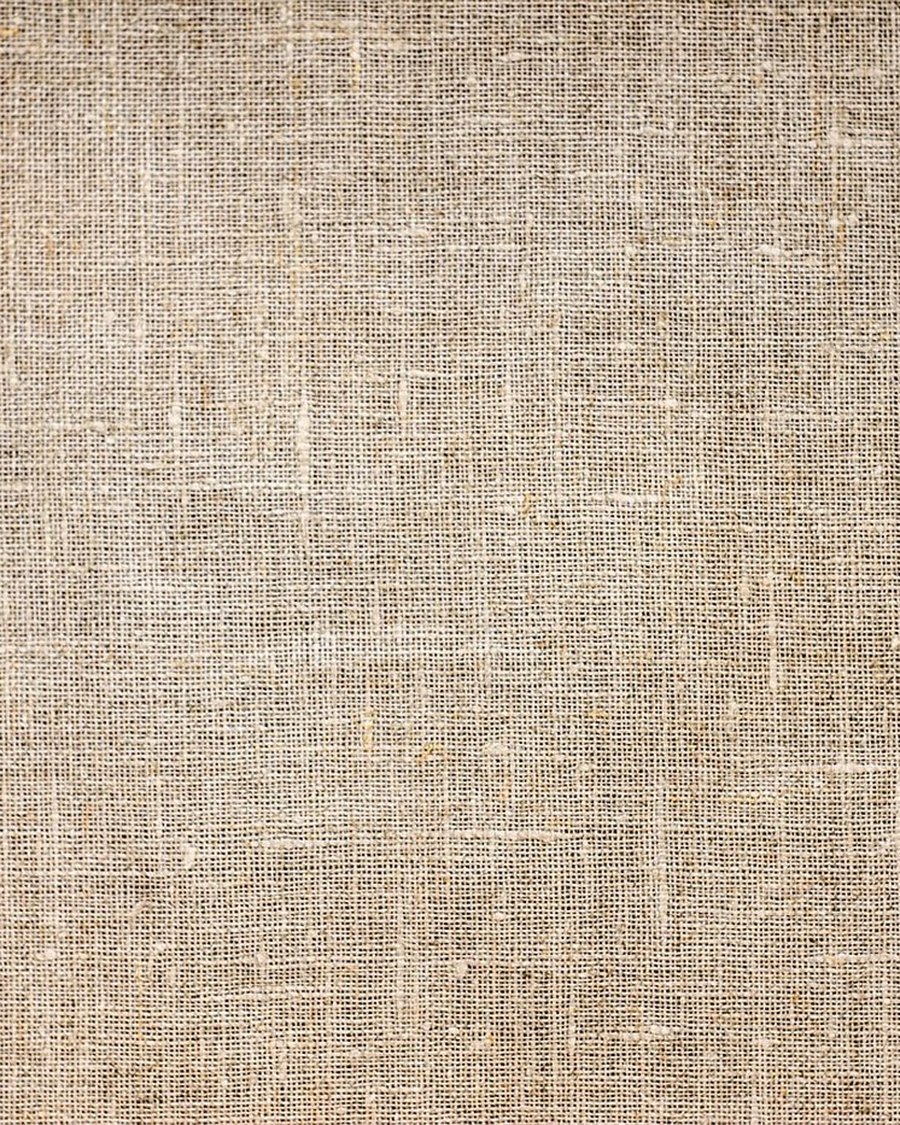
Hold the shirt up to a window. If a hand behind it reads as a silhouette, air moves through the cloth; if the surface is a solid sheet, it does not, whatever the fiber says. The technical version is cover factor, the share of the surface occupied by yarn rather than gap, set by yarn diameter and by how many ends and picks per inch the mill packs in.
This is why a 120 GSM poplin can wear warmer than a 150 GSM voile. Poplin uses a fine, tightly sett warp over a heavier weft, so the surface is smooth and closed and holds a layer of still air against the skin. Voile spreads a similar weight of cotton over more air. The industry measures the result as air permeability, in millimeters per second through a fixed area at a fixed pressure, and the spread between two equal-weight shirtings matters more than a few degrees of room temperature.
An open weave also lets vapor out. A closed cloth forces moisture to condense inside, and a damp layer conducts heat away once you stop moving.
Yarn count, ply and the tightness of the cloth
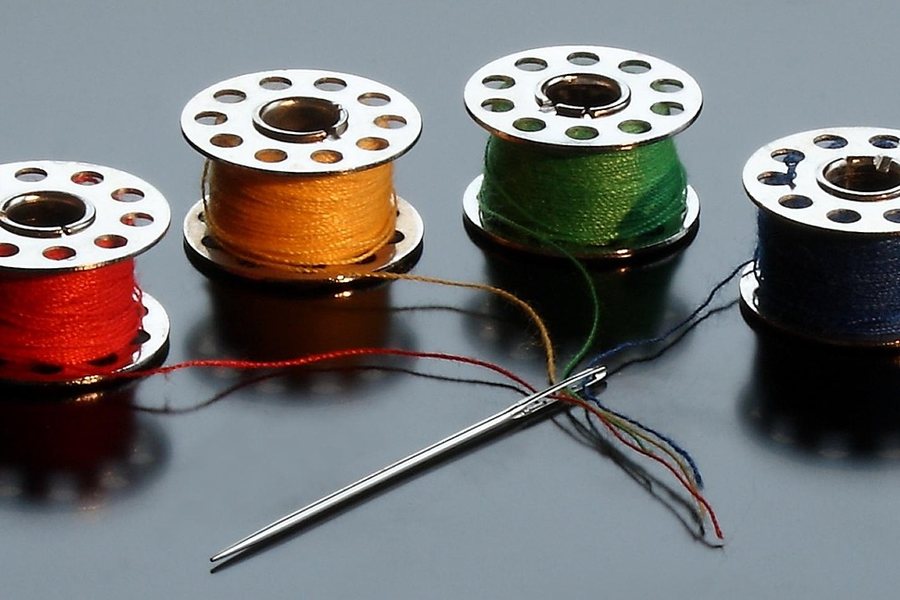
Yarn count is a fineness number: 60s is finer than 40s, and a finer count gives more length of yarn per kilo. Ply is the number of singles twisted together, so 2/60 means two 60-count yarns plied into one. Ply matters because a two-ply yarn is stronger at a fine count, which is how a mill can use a lower sett and leave more air in the cloth without the shirt tearing at the seam.
A single-ply yarn at the same finished weight needs a tighter sett to hold together, and a tighter sett is a warmer shirt. That is the quiet reason two 140 GSM shirts sit at different temperatures, and it is not visible on any label. The field test is the window plus a squeeze: a cloth that creases sharply has more yarn per inch than one that falls back.
The fiber decides how moisture leaves
Cooling in a shirt is evaporation, so the useful question is not how much water a fiber absorbs but how quickly it lets go. Linen, from the flax plant, has a smooth, straight fiber and is usually spun at low twist, so water spreads along the yarn and out to the surface where air can take it. Cotton absorbs readily, but its fiber is convoluted and holds water in the lumen, so a soaked cotton shirt stays damp longer against the skin.
Wool takes up as much as 30 percent of its weight in moisture before it feels damp, according to Woolmark’s guidance, and releases it slowly. That is an advantage in cold rain and a liability in heat, because the water leaves the body cool but the cloth stays damp.
Polyester absorbs almost nothing, which sounds like an advantage and is not. In a tight knit it passes no vapor, so sweat stays on the skin; in a loose mesh it can be cooler than tight cotton, because the openness is doing the work and the chemistry is not. Fiber is the second variable, never the first.
Color changes light, not airflow
Black absorbs more visible light than white, so in direct sun the surface warms faster and feels measurably hotter to the hand. That advantage disappears in shade, under a jacket, in a car with the air conditioning on, and in every office lit by tubes. In those conditions a black open weave beats a white tight weave every time.
The useful version of the color rule is narrow: light colors for a day spent in the sun, open weaves for a day spent in a building, and no color rule at all for a commute that is twelve minutes of street between two cooled rooms.
What the label can and cannot tell you
Read the fiber list in order, because the first fiber is the majority and the second is the one that usually decides how the cloth creases and how it dries. After that, look for what adds a layer without adding a garment: a full lining in a summer trouser is a second cloth over the thigh; two percent elastane requires a tighter construction that costs airflow; a bonded lapel interlining is weight you did not ask for.
| Cloth | Typical GSM |
|---|---|
| Cotton voile | 70-110 |
| Cotton poplin shirting | 110-150 |
| Cotton oxford | 140-190 |
| Linen shirting | 140-200 |
| Linen trouser | 200-280 |
| Cotton jersey tee | 140-180 |
These are working ranges from mill and brand specs, not a standard. The bands overlap on purpose: a heavy poplin and a light oxford can weigh the same and still behave differently, which is why the window test is the final check. What composition percentages imply covers the fiber side of the same label.
Where the advice stops working
Humidity above roughly 70 percent defeats all of it. Nothing evaporates, so every fiber feels hot and the only gains left are wearing less cloth and a looser cut. Air conditioning below about 22 degrees Celsius reverses the calculation: a 110 GSM shirt is too little, and 160 to 200 is the useful band even in July.
Fit can outweigh weight. A tight shirt has no air gap and no room for vapor to move, so a loose 200 GSM linen camp shirt worn open is cooler than a fitted 140 GSM poplin buttoned to the collar. And a dark shirt in direct sun for an hour only beats a white one if its weave is more open, the one case where color and weave pull against each other. Linen shirts compared by weight and collar takes the same measurements across specific shirts.
Frequently asked
- Is black really hotter than white in summer?
- Outdoors in direct sun, black absorbs more visible light and the cloth surface warms faster. Indoors, or in shade, the difference is small next to fabric weight and weave, which control how much heat stays near the body.
- What does GSM mean on a clothing label?
- Grams per square meter: the weight of one square meter of the cloth, not of the whole garment. It lets you compare two pieces across brands, and since most labels omit it, the fiber list and the weave have to do the work instead.
- Is linen always cooler than cotton?
- No. A tight cotton poplin can be cooler than a heavy linen twill, because weave openness matters as much as fiber. Compare like with like: a plain-weave linen shirt against a plain-weave cotton shirt at similar weights.