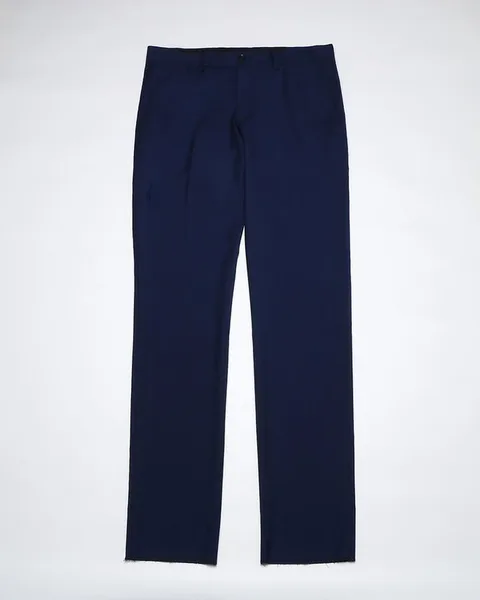
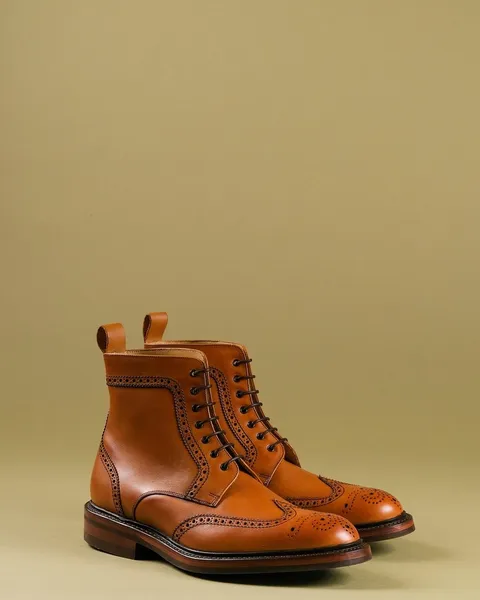
The formula · Outfit Formulas
Wide-Leg Trousers: Rise, Leg Opening and Shoe Volume as One Decision
Leg opening, rise and shoe volume move together. What 8, 10 and 12-inch hems need underneath, and how the top length changes as the opening widens.

A wide-leg trouser is not a width. It is a relationship between three numbers: the leg opening at the hem, the front rise where the fullness starts, and the volume of the shoe underneath. Change one and the other two stop working. An 11-inch opening over a flat loafer looks like a borrowed trouser; the same opening over a 1.5-inch platform reads as a decision.
Read the opening as a flat measurement
Size charts list leg opening as a flat half-measure, taken across the hem with the trouser lying flat, so a 10-inch opening is 20 inches around. That is the number to compare, not the word wide. Under 8 inches the trouser is straight; between 8 and 9 it is a generous straight; from 9.5 to 11 it is wide. Above 11 the hem starts to behave like a skirt and needs a shoe with real volume to anchor it.
The measurement is taken at the hem, but the width is not created there. Lay the trouser flat and compare the knee with the hem: 10 inches at the hem and 8 at the knee is a cone, 10 at both is a column. A trouser wide only at the hem is a flare, which behaves differently when walking. The leg opening guide sets out what each increment reads as.
Rise decides where the width begins
Rise tells you where the fullness starts and how tall the outfit looks. An 11-inch rise carries the width from the hip, so the widest part of the body and of the trouser sit close together and the leg reads long. A 9-inch rise releases the width from mid-thigh, and the same hem reads wider because the eye has more loose cloth to travel before it reaches the floor.
Rise also decides what can be worn above. A high rise holds a tucked top without a belt and gives a wide hem a long vertical to balance. A low rise with a wide hem leaves a short torso above a lot of cloth, a proportion that works on a tall frame and rarely on a short one. Measure from the crotch seam to the top of the waistband, band included, as set out in rise explained; the band is worth about 1.5 inches.
The shoe has to fill the hem
A wide hem hangs from the widest point of the leg, and whatever sits below it sets the proportion. A loafer with a 0.5-inch sole leaves a 10-inch opening with nothing to land on. A sneaker with a 1-inch rubber sole, or a boot with a 4-inch shaft, gives the hem an edge to break against.
As a rule of thumb, the sole should be at least a tenth of the flat opening: 0.8 inches under an 8-inch hem, 1 inch under a 10-inch, 1.2 inches under a 12-inch. Below that the hem looks unmoored; well above it the shoe looks heavy. Heel height is a separate question, covered in inseam against heel height, because a wide hem already adds apparent length.
Top length moves with the opening
The wider the hem, the shorter the top needs to be, or the more deliberately it has to be tucked. With an 8-inch opening, a 26-inch shirt worn out lands at the hip and keeps a clear vertical line. With a 10-inch opening the same shirt ends at the widest part of the silhouette and squares off the body. Either tuck it, or choose a top of 22 to 23 inches that stops above the waistband.
A 27-inch jacket over a 10-inch hem reads as a considered proportion; a 30-inch coat closes the gap between shoulder and hem and the outfit becomes a single block. The ratio between rise and opening is the same one set out in wide legs work on a ratio, applied from the top down rather than the hem up.
| Flat leg opening | Minimum sole | Top length worn out | Front rise |
|---|---|---|---|
| 8 in | 0.8 in | 26-27 in | 10 in |
| 10 in | 1 in | 22-23 in, or tucked | 11 in |
| 12 in | 1.2 in | tucked, or cropped at 21 in | 11-12 in |
Fabric has to hold the line
A wide leg is a structural claim, and the fabric either supports it or collapses. A wool or cotton twill with enough body holds a crease and keeps the line through a working day. A fluid viscose or crepe drapes, which is a different look and a different behavior: the hem moves with the leg rather than hanging from it.
Two percent elastane helps a wool trouser recover at the seat and knee, which is where a wide leg loses shape first. The same percentage in a viscose cannot stop the cloth collapsing at a pleat, because the fiber has no memory and the elastane is doing all the work. Read the composition before the measurement: a 100% viscose wide leg is a summer trouser, and it will not hold a pressed front in humidity.
Pleats add a second variable: a single pleat reads formal, a double reads wider, while a flat front takes its width from the cut, which is more forgiving across the stomach.
Hem length, break and the alteration bill
Hem length is where most of the money is lost. A hem that clears the sole by half an inch is the safe finish for a wide leg: it shows the shoe, keeps the cloth off the ground, and survives being worn with a different heel. A hem that touches the ground collects wear at the back and is difficult to alter later without losing width.
The break is the fold where the hem meets the shoe. A wide leg looks best with no break or a single slight one; a deep break piles cloth on the instep and shortens the leg. Measure standing, in the shoes that will be worn, because a seated measurement runs short by an inch or more.
Alteration prices vary by market and by hem type, so compare the cost against the price of the trouser. On an inexpensive pair, hemming twice costs more than the difference between a good hem and a returned parcel.
Where the formula breaks
Three failures recur. The first is a wide leg with a high rise and a cropped top on a short torso, which leaves several inches of visible waistband and no vertical line. The fix is a longer top or a lower rise, not a narrower hem.
The second is a pleated wide trouser in a fluid fabric, where the pleats collapse after an hour of sitting and the hem loses the shape it had on the hanger. No size chart predicts this; the composition label does.
The third is the shoe substitution. A trouser hemmed for a 2-inch heel and worn with a flat drags at the back, and the same trouser hemmed flat and worn with a heel floats. A wide leg exaggerates both. Where two heel heights are in regular use, hem to the lower one and accept a slight break with the higher, which is the cheaper compromise.
The order follows from all three: shoe first, then hem, then top. The shoe sets the hem, the hem sets which width will read, and the top is the only piece that can be changed later without a tailor.
Frequently asked
- What counts as a wide leg opening?
- Measured flat across the hem, 9.5 to 11 inches is wide, and anything above 11 inches behaves like a skirt. Under 8 inches the trouser is straight; 8 to 9 inches is a generous straight leg.
- Can wide-leg trousers be worn with flat shoes?
- Yes, if the sole has some thickness. A flat loafer under a 10-inch opening leaves the hem nothing to land on. A sneaker with a 1-inch rubber sole or a low boot gives the hem an edge to break against.
- Should wide-leg trousers be hemmed to the floor?
- A hem that clears the sole by half an inch is the safe finish. Full-length hems that touch the ground collect wear at the back and are difficult to alter later without losing the width.