The denim ledger · Denim & Trousers
Inseam Against Heel Height and Hem Finish
How much leg length a heel actually buys, what a cropped hem does to the leg line, and the hem allowance that decides whether to buy long.
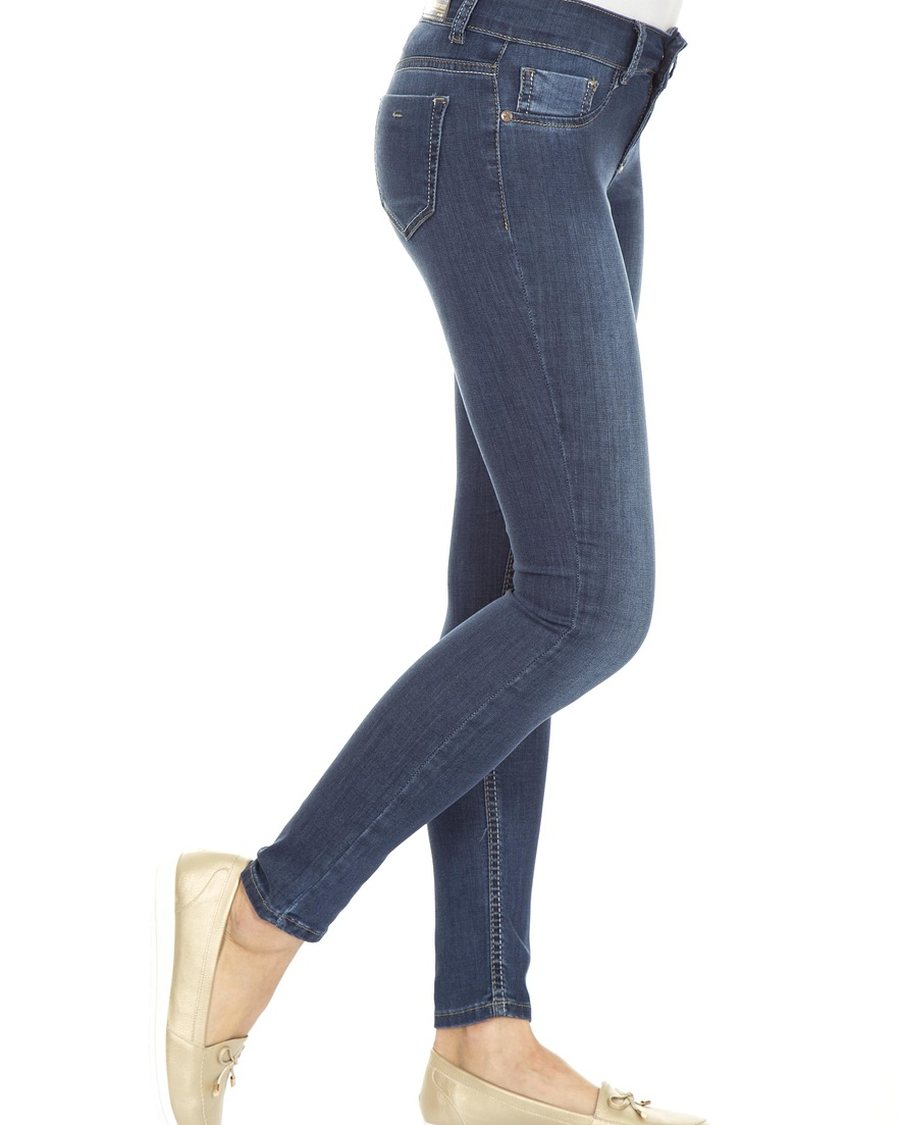
A trouser hem is a decision about one point in space: where the cloth ends relative to the shoe. Inseam sets that point when you stand still, heel height moves it, and the hem finish decides whether you can move it again later. Get the three out of order and a pair that fits at the waist will still look wrong from the knee down.
Inseam is a garment number
Inseam runs from the crotch seam to the hem, measured flat on the inside of the leg. It is not the length of your leg. A trouser crotch hangs an inch or two below the body’s crotch, so a 30-inch garment inseam covers a 31 or 32-inch body leg; the difference is the drop built into the rise. Charts describe the garment, and the garment is what the shoe sees.
That is why two pairs labeled 30 inches can end half an inch apart. One may measure to the bottom edge of a finished hem, another to the seam line above a turn-up, and a third may include an allowance that will be cut away. The reliable method is to take a pair you already own that ends where you want it, lay it flat, and measure that.
What a heel buys, in inches
A heel does not add inseam. It raises the back of the foot by its height, and the back hem rises with it. At the front the change is smaller, because the toe stays near the floor and the foot pivots over it, so the hem tips forward and the back clears more than the front.
| Heel height | Back hem clearance, inseam unchanged | What it reads as |
|---|---|---|
| Flat, 10 mm sole | none | hem resting on the shoe |
| 1 in | 1 in | a slight hover |
| 2 in | 2 in | a crop over a closed shoe |
| 3 in | 3 in | a flood over a loafer |
A platform behaves differently from a heel even at the same height. A 2-inch platform lifts the whole foot two inches without changing its angle, so the hem clears evenly front and back. A 2-inch heel lifts the back only, which is why the same trouser reads level over a platform and cropped at the back over a heel.
Where the hem lands matters as much as the figure. Two inches of clearance over a closed shoe shows sock or ankle, a deliberate crop. The same two inches over a sandal shows the top of the foot as well, and the leg line ends in two places. Open shoes need less clearance, not more.
Break, pooling and the back hem
Break is the fold where the hem meets the shoe, and it is measured in cloth, not in style. A full break carries one to two inches of extra length and folds once or twice over the instep. A half break touches the vamp and folds slightly. No break skims the shoe with the hem straight.
The break changes with the opening. The same extra inch that folds once on an 8-inch hem stacks twice on a 10-inch one, because a wide hem has more circumference to compress. On a wide leg, aim for no break and let the hem hang; on a straight leg, a half break is the tidiest.
Walking adds length at the back. A hem cut to graze the floor in front will brush it at the back with every stride, because the shoe pushes the heel down and the cloth follows. A hem that drags wears through at the back corner first, and no amount of pressing restores it. An inch of clearance in front is the safer target for a full-length trouser.
Crop and the leg line
A crop removes the bottom two to four inches of the leg and replaces them with ankle. On a straight or slim leg it reads as intentional, because the taper continues to the hem. On a wide leg it reads as an error: a 10-inch opening stopping above the ankle looks like a hem that ran out of cloth.
The shoe has to carry the gap. A low, close shoe under a cropped straight leg keeps the line continuous. A chunky sole under the same crop adds height at the bottom and makes the gap look wider than it is, an effect covered in boot shaft against trouser hem width.
There is one crop that works on a wide leg: the hem ends an inch above the top of a boot shaft, so the boot becomes the bottom of the leg rather than a separate object below it. That requires a shaft within half an inch of the hem’s width.
The hem finish is part of the number
A chain-stitched hem on denim contracts as it sews, producing the slight ripple known as roping. It is used on straight legs and avoided on tapered ones because the ripple adds visible width at the ankle. A blind hem on wool turns the cloth inside and catches it invisibly, which keeps the opening intact for a pressed crease. A raw hem can be cut to any length and frays to a stable point, making it the most forgiving finish when the inseam is close but not exact.
A turn-up is a hem with depth. Two inches of cuff costs two inches of length, adds weight at the ankle, and leaves a permanent line when it is let down. It also narrows the visible opening, because the folded cloth sits inside the hem rather than hanging free.
When to buy long
There are three clear cases. The first is a hem allowance under an inch, where the current length is the only length. The second is cloth that will shrink: unsanforized denim can lose an inch or more in the first wash, and the care label will say whether the cloth is unsanforized. The third is a shoe change you already know about, such as a boot worn from October to March.
In all three, buy the longer inseam and have it cut. Taking length off is a clean alteration; adding it is impossible beyond the allowance folded inside the hem, and a let-down hem leaves a faint line where the old fold sat. What alterations are worth paying for sets out where the cost stops making sense.
The exception is a raw hem on denim. Cutting it removes the factory finish, and the new edge frays at a different rate.
Match the shoe you wear most
Count the days, not the outfits. If one pair of shoes takes four days out of five, hem to that pair and accept a slight hover with the fifth. Hemming to the higher shoe leaves cloth pooling in the lower one, which shortens the visible leg and wears the hem.
Where two heights are in regular use, hem to the lower and let the higher clear. A hem that clears by an inch on a heel is a crop; a hem that pools by an inch on a flat is damage. The asymmetry favors the lower shoe every time.
Sole shape matters as much as height. A pointed toe extends past the hem and gives the cloth something to break against; a round toe with a low vamp leaves the hem hanging. The outfit built around one shoe starts from this end, and the commute shoe explains why a 10 mm rubber sole changes the hem line as much as a heel does.
Frequently asked
- Does a two-inch heel need a two-inch shorter inseam?
- No. A heel does not change the inseam, only where the hem lands relative to the ground, so a trouser hemmed for flats hangs about two inches clear in a two-inch heel and reads cropped.
- How much hem allowance is enough to let a trouser down?
- An inch is workable and an inch and a half is comfortable, because the old fold has to be pressed out and re-stitched. Half an inch leaves a visible line where the previous fold sat.
- Should jeans be bought longer than the size chart suggests?
- Only if the cloth will shrink or the hem will be cut. Unsanforized denim loses length in the first wash, and a raw hem loses length when it is finished; otherwise buy the inseam measured with the shoe worn most.