The season · Seasonal Edits
Four Garments to Retire in Spring
Four criteria for retiring a garment in spring: pilling, stretched cuffs, faded dye and a seam allowance with nothing left to give.
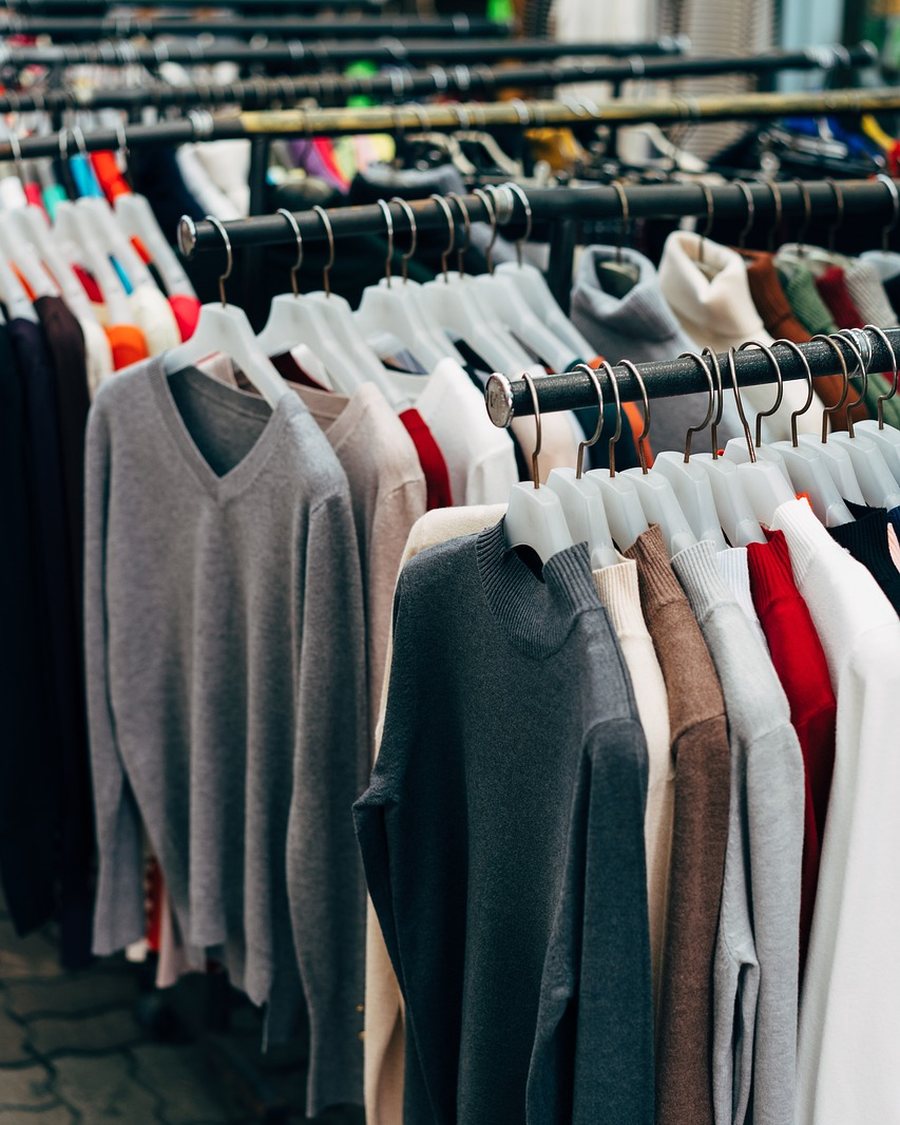
Spring is the wrong season to buy and the right one to subtract. The coat you wore for six months is about to go into storage, and the knit underneath it has had a full winter of abrasion at the underarm. Four checks decide whether a piece goes back in the drawer or out of the house, and all four can be run in about a minute without a mirror.
Pilling that survives a brush
A pill is a knot of fiber ends that abrasion has rolled together. Whether it forms, and whether it stays, depends on staple length and how the yarn was spun rather than on price. Short fibers work loose, tangle with neighbors and sit on the surface; a long fiber stays anchored by a tail that pulls back into the cloth.
That difference is what you check for, not the presence of pills. Brush the underarm once with a knit comb and look at the cloth in raking light. A surface pill leaves an even face. An anchored pill takes cloth with it: a shallow depression, a halo of loose fiber, and a patch that feels thinner than the same area on the other side.
Retire the piece when the thin patch is visible at arm’s length. Why expensive wool still pills works through the fiber-length mechanism; the short version is that the pill is a symptom and the thinning is the diagnosis.
Cuffs that no longer return
Rib is a structure rather than a fiber: alternating knit and purl columns that fold inward and pull the edge back after it stretches. The geometry does part of the work and elastane does the rest, which is why a rib can look intact and still be finished. Elastane is degraded by heat, chlorine and light, so a knit that goes through a dryer every week loses recovery years before one that is dried flat.
The test takes ten seconds. Stretch the cuff over a fist, release, and compare the opening with the unstretched cuff. A quarter inch of permanent set is the working threshold; past that, each wear adds more set and the cuff keeps opening.
Distinguish a rib that has stretched from one that has tired. A wool cuff pulled out of shape by hanging wet will usually re-block, because the fiber can be persuaded back; a rib that no longer snaps when pulled sharply has lost its elastane. How a knit recovers sets out the blocking method and where it stops.
Dye that has gone flat at the fold
Fading is easiest to judge against cloth that has never seen light. Turn the garment inside out and find an internal seam allowance at the side seam or inside the hem, then compare it with the outside at the shoulder or the knee. Do it in daylight rather than under a tungsten bulb, which flatters dark cloth and hides the difference.
If the gap is obvious in daylight, the garment has faded. The direction of the shift is predictable: black goes brown or gray, navy goes purple or teal, charcoal goes green, and indigo goes pale blue at the fold before it goes white at the crease. Even fading can be lived with, since the garment simply becomes a lighter version of itself. Patchy fading at the collar, cuffs and seat cannot, because the eye reads the contrast rather than the color.
Home dyeing does not fix this: worn areas take dye differently from intact cloth, so a black garment redyed black comes out patchy, and the patchwork is more visible than the original fade.
Seams that have given up their allowance
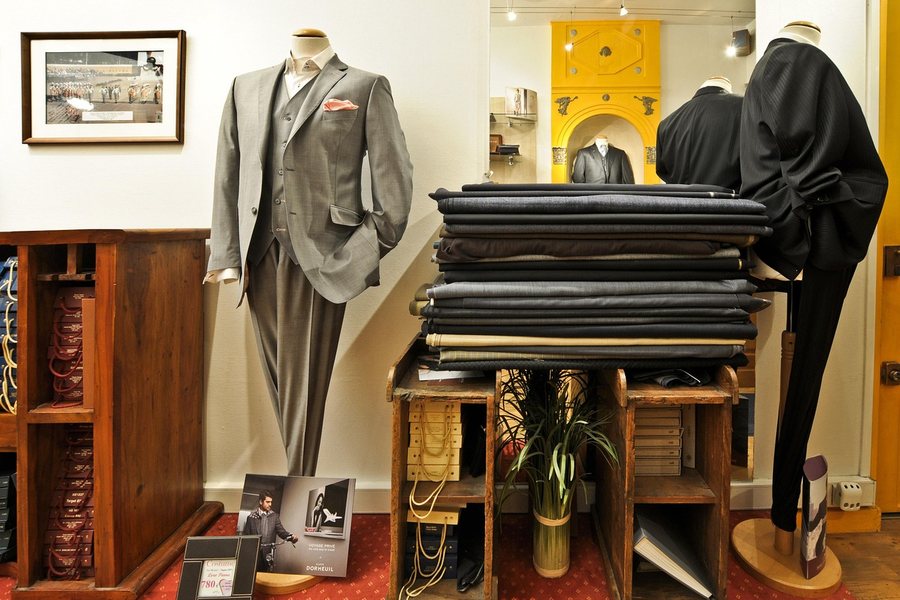
Turn the garment inside out and look at the side seam. Knits are usually overlocked with about three eighths of an inch of allowance; woven trousers and jackets carry five eighths, sometimes half. Measure from the stitch line to the raw edge with a ruler. Fraying that has reached within an eighth of an inch of the stitch line means the seam is being held by the thread alone and will open in a wash.
Then test for seam grin. Grip the cloth on both sides of the seam and pull gently across it; if the stitches separate and show white, the seam was under-built or the thread has shrunk and lost tension. On a knit, a stitch line that has begun to pull small holes through the cloth along its length cannot be repaired without re-sewing the whole seam, which is a tailor’s job on a garment that may not deserve one.
The same measurement answers the alteration question before you pay for it: an inch of hem allowance can be let down and pressed out, half an inch leaves a line. Which alterations are worth the money covers the rest.
What a repair can and cannot fix
Darning replaces missing cloth with new yarn, visibly. It is worth doing on a coat lining, a sock or a sweater worn under a jacket, and it does not restore stretch, so a darned underarm on a fitted knit pulls out again. Cuff replacement is possible: a knitter can cut the old rib away and knit a new one, at a cost comparable to half a replacement garment.
Re-lining a coat is usually worth it if the shell is sound: the lining fails first and the shell is the expensive part. Re-knitting a thin underarm is not economic at retail prices, and redyeing a dark garment is not a repair at all.
A working rule: repair if the quote is under a third of replacement cost and the piece has thirty wears left in it. Forty dollars on a ninety-dollar knit worn twice a month for two years is reasonable; the same money on a sixty-dollar knit with a thin underarm postpones a decision.
The cost of keeping it
A failed garment is not free to keep. It occupies a hanger and gets worn on the mornings when nothing else is clean. The per-wear figure is blunt: $180 over 40 wears is $4.50; $60 over six wears is $10. The second garment cost less and costs more.
There is also displacement. Drawer space is fixed, and a piece that fails keeps a better one out. That is the argument for subtracting in spring: the gap you create is what a good purchase fills in autumn.
A ten-minute pass through the rail
Run the checks in order of what can be reversed. Structural first, meaning seams and hem allowance, because a seam frayed to the stitch line will fail in the wash whatever the surface looks like. Then recovery, meaning cuffs, neckline and waistband. Then surface, meaning pills. Then color, which is the only one that is purely cosmetic.
Two failures and the piece goes. One failure means repair, or demotion to house, garden and laundry-day duty. None means it stays. Put the outgoing pile in a bag for thirty days; anything retrieved gets one repair, not a reprieve. The audit by slot is the slower version of the same exercise, done one category at a time.
Frequently asked
- Should you throw away pilled knitwear?
- Not on the first pill. Surface pills that brush off are normal wear; pills anchored in the yarn, clustered at the underarm or cuff, mean the fiber is breaking down and a thin patch will follow within a season.
- Can a stretched cuff be repaired?
- Sometimes. A rib cuff that has lost its elastane will not come back with washing, but a wool cuff that stretched while drying can be re-blocked with water and gentle heat. If the rib does not snap when pulled sharply, blocking will not hold.
- How much hem allowance is enough to let down?
- An inch is workable; half an inch leaves a visible line where the old fold sat. Turn the hem up and look at the cloth folded inside: if the fold sits hard against the stitching, there is nothing left to release.