The formula · Outfit Formulas
A Light Knit Over a Heavy Shirt, and the Reverse
Why a fine gauge knit over an oxford reads clean while a chunky knit over poplin collapses at the shoulder, explained in GSM, gauge and ease.
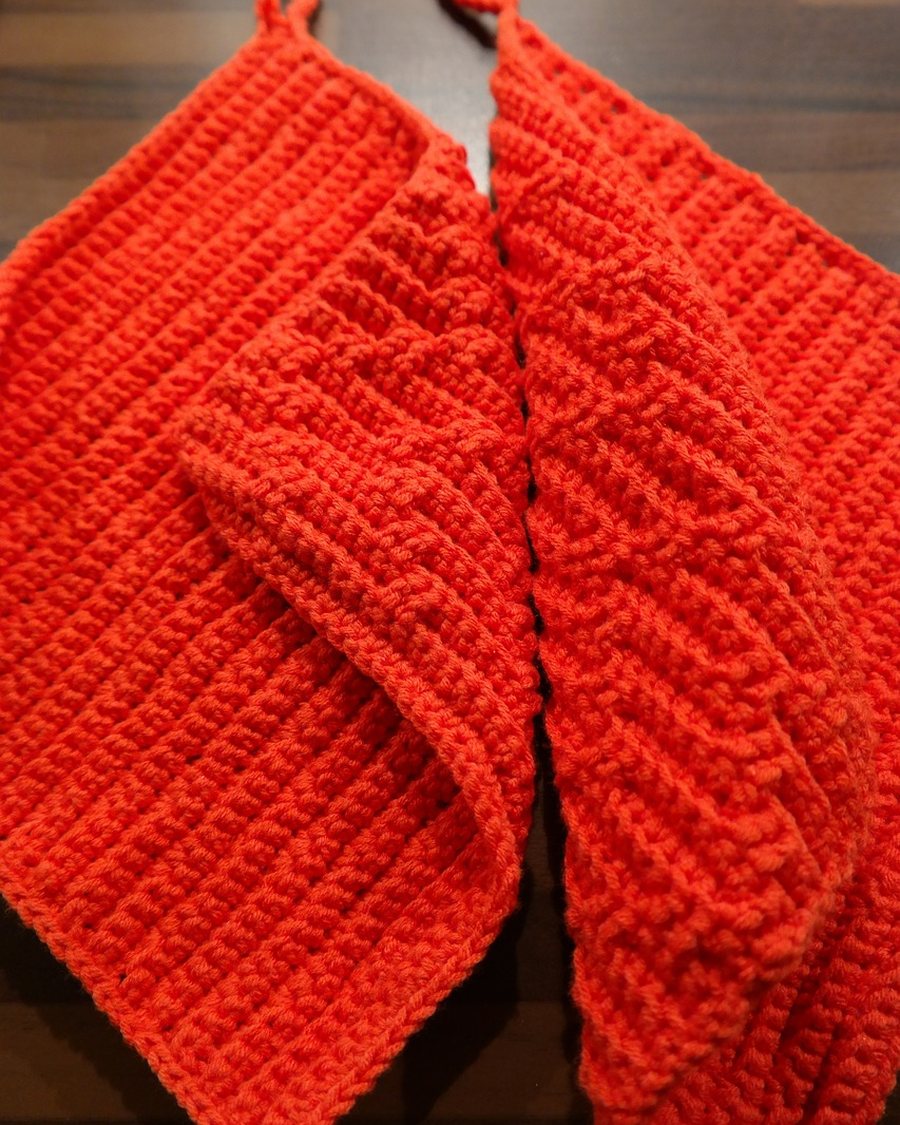
Two layers of different weights stacked on the same body will either settle into each other or fight. The difference is not taste. It is the thickness of the inner layer at the shoulder, the depth of the outer layer’s armscye, and whether the outer garment was drafted to sit over a shirt at all.
The order is set by thickness
Fabric weight is measured in grams per square meter, usually to the ASTM D3776 method, and the figures that matter for layering sit in a narrow range. A cotton poplin shirt runs about 100 to 120 GSM. An oxford cloth runs 140 to 170. A 12-gauge fine knit runs 180 to 240. A 7-gauge knit runs 350 to 450, and a 3-gauge cable can pass 600.
Those numbers decide which layer can sit on which. The outer garment has to be big enough to contain the inner one without compressing it, and the inner one has to be thin enough that the outer one’s shoulder does not climb. A 110 GSM poplin under a 220 GSM knit is a difference of about 1.5 mm at the chest, which most patterns absorb. A 110 GSM poplin under a 600 GSM cable is a difference of 6 to 10 mm, which most patterns do not.
Gauge and GSM are different numbers
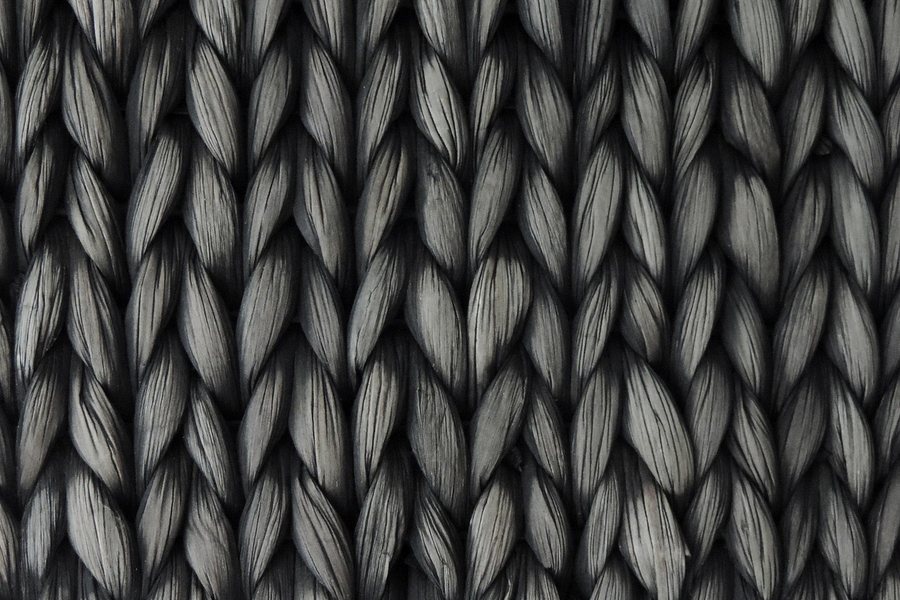
Gauge counts needles per inch on the knitting machine. A higher number means more, finer needles and a thinner yarn; the surface comes out tighter and the garment lighter. A 12-gauge knit is typically 1.5 to 2 mm thick, a 7-gauge is 3 to 4 mm, and a 3-gauge cable measured at the shoulder can reach 6 to 10 mm.
GSM and gauge usually move together, but not always. A loose 12-gauge knit in a fluffy yarn can weigh as much as a tight 7-gauge in a dense one, and the loose knit will be thicker at the shoulder despite the finer gauge. Gauge, explained sets out where the two measures diverge. Thickness is the number that matters, and neither figure gives it directly.
A brushed or cable 12-gauge can add 3 mm at the chest, enough to change the shoulder line of a close-fitting blazer, even though the label reads fine gauge.
What the armscye has to absorb
The armscye is the armhole seam, and its depth and curve are drafted for a specific amount of cloth underneath. A shirt pattern assumes a body plus a shirt. A knit pattern assumes a body plus a knit, or a knit over a tee. Neither assumes both.
A workable rule is 2 to 3 inches of chest ease in the outer garment beyond the inner layer’s measurement, and an armscye deep enough that the sleeve head can rotate without pulling the body. When the inner layer is 4 mm thicker than the pattern expected, the seam sits higher on the shoulder, the sleeve twists forward, and the body lifts when the arm does.
The shoulder seam is the visible marker. On a knit worn over a shirt, the knit’s seam should sit no more than an inch beyond the shirt’s. Further out and the knit is held up by the shirt rather than resting on the shoulder.
The shoulder-collapse case
Put a 3-gauge sweater over a 110 GSM poplin and the stack fails in a predictable order. The sweater’s shoulder measures 6 to 10 mm thick when laid flat; the shirt is under half a millimeter. The sweater was drafted to sit over a body or a tee, so its armscye has no allowance for the shirt’s sleeve head.
The shoulder line rises by close to half an inch, because the sweater is now standing on the shirt’s shoulder seam rather than on the body. The armscye, already cut close, runs out of room. The sleeve rotates forward to find space, which drags the shirt sleeve with it and produces a diagonal fold from the shoulder toward the armpit. The shirt hem rides up because the knit’s body is shorter than the shirt’s and grips it at the waist.
No amount of adjusting fixes this. Pulling the shirt down moves the fold; pushing the sleeve up moves the twist. The garment is the wrong size for the stack, not the wrong size for the body.
Fine knit over an oxford
This is the pairing that reads deliberate. A 12-gauge merino over a 150 GSM oxford adds roughly 2 mm at the chest, which a knit drafted with 2 inches of ease absorbs without strain. The shirt collar sits inside the knit’s neckline because the knit’s neck opening is usually 0.5 to 1 inch wider than the shirt’s collar band.
Three checks decide it. The knit’s shoulder seam should land no more than 1 inch beyond the shirt’s. The shirt cuff should show 0.5 inch below the knit cuff, which requires the knit sleeve to be cut shorter rather than pushed up. And the knit’s hem should end at the hip bone, not at the widest part of the seat.
The collar is a separate variable. A spread collar inside a crew neck leaves the points visible and reads intentional; a button-down collar bunches under a crew and disappears under a V. A knit over a collared shirt works through the collar numbers.
Shirt over a knit
The reverse is more useful than it sounds. A poplin or oxford overshirt cut 3 to 4 inches wider than the body, with a straight hem and a back yoke wide enough to clear the knit, will hang clean over a 12-gauge layer. The knit has to be smooth: a cable or a brushed surface creates friction, and the shirt rides up within a few steps.
The failure here is horizontal, not vertical. A shirt cut close over a knit pulls across the chest and the buttons gape; a shirt cut wide enough but short in the body flares at the hem. The straight hem is what keeps it a shirt.
When the outer layer is already heavy
If the heavy knit is the one you want to wear, the inner layer has to change rather than the outer. A heavyweight tee at 220 GSM adds about 1 mm, which a 3-gauge sweater can absorb; a poplin shirt adds a collar, a placket and a sleeve, all of which are thicker at the edges than the cloth between them.
The alternatives are narrow. Wear the heavy knit over a tee, or over nothing. Wear the shirt under a 7-gauge rather than a 3-gauge. Or choose a shirt cut with an extra inch at the armscye and a shorter body, which is a different shirt rather than an adjustment to the one you own.
Two checks at the rail
The first check happens before trying anything on. Lay the outer garment flat, measure the thickness of its shoulder, and compare it with the inner layer’s. A difference above 3 mm needs an outer garment with visibly more room at the armhole, not a larger size.
The second check is movement. Put both on, raise the arms overhead, and look at the shoulder seam. If the outer seam lifts off the shoulder, the armscye is too shallow for the stack; if the inner cuff disappears, the outer sleeve is too long. Layer order in shoulder season applies the same test to three layers, where the errors compound rather than add.
Frequently asked
- What gauge counts as a fine knit?
- Twelve gauge and above, where gauge means needles per inch on the knitting machine. A 12-gauge knit usually weighs 180 to 240 GSM; a 7-gauge sits near 350 to 450 GSM, and a 3-gauge cable can pass 600 GSM.
- Can a chunky sweater be worn over a dress shirt?
- It can, but the shirt has to be cut with extra room at the armscye and the sweater needs at least 3 inches of chest ease. Without both, the shirt sleeve bunches at the elbow and the sweater shoulder lifts off the wearer.
- Does a shirt over a knit ever work?
- Yes, with a fine knit and an overshirt cut 3 to 4 inches wider than the body. The shirt needs a straight hem and a smooth lining-free back, or it will catch on the knit and ride up when the wearer moves.