The layer report · Knitwear & Layers
Knit Gauge From 3 to 14, and What Each Is For
Knit gauge is needles per inch. What 3, 7, 12 and 14 gauge do to warmth, drape and pilling, and how ply changes the same number.
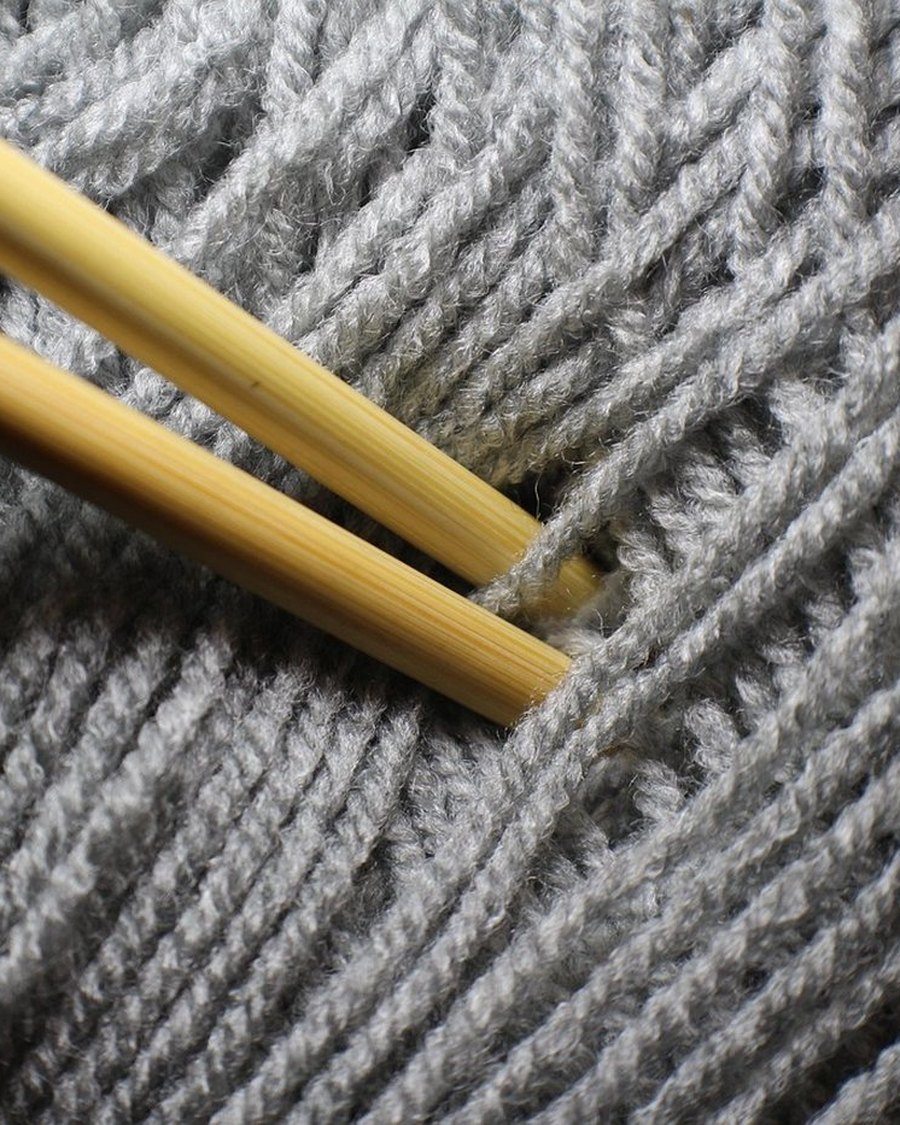
A 12-gauge crewneck and a 7-gauge crewneck can be the same fiber, color and price, and one layers under a blazer while the other wears like a jacket. The difference is not weight on a scale. It is the number of needles per inch that knitted the cloth, which sets the yarn thickness, the stitch size and everything that follows from both.
What the number counts
Gauge, written gg, counts needles per inch across a flat knitting machine’s needle bed. The arithmetic is literal: 25.4 mm divided by the gauge. Three gauge gives 8.5 mm between needles, seven gives 3.6 mm, twelve gives 2.1 mm, fourteen gives 1.8 mm, eighteen gives 1.4 mm. A yarn has to pass between two needles, so the spacing sets the thickest yarn the machine can carry, and gauge and yarn thickness travel together.
The label states the machine, not the cloth. Finished fabric is measured in wales and courses per inch, taken after washing and pressing, and a 12-gauge panel that has relaxed can measure looser than the same panel off the bed. Two sweaters labeled 12gg can therefore feel like different gauges in the hand.
Needles per inch against warmth
Warmth comes from still air held inside the cloth, not from the fiber itself. Thicker yarn makes thicker cloth, and thicker cloth holds a deeper layer of air: a 3-gauge knit runs several millimeters thick, a 14-gauge around one.
In still air a single 3-gauge knit is warmer than two 7-gauge layers, because one slab of trapped air has no internal boundary where surfaces slide and air moves. Put the wearer in wind and the answer reverses: the coarse knit’s openings are large and leak, while two 7-gauge layers give the wind an outer barrier and leave the gap between them as dead air.
Fine gauge buys warmth through density rather than depth. A 14-gauge merino crew adds a millimeter of still air and almost no bulk at the armhole, which is why it goes under a coat that a 7-gauge cannot. Bought for warmth alone, it provides the layer, not the insulation.
Needles per inch against drape
Bending stiffness rises with the cube of thickness. Double the thickness and the cloth is roughly eight times harder to bend, which is why a 3-gauge knit stands away from the body and a 14-gauge follows the collarbone.
Drape decides whether a knit tucks, whether the hem kicks out over a trouser and whether the collar rolls or stands. A 12-gauge tucks because the cloth bends at the waistband; a 7-gauge tucks badly, leaving a shelf of fabric at the waist; a 3-gauge does not tuck at all.
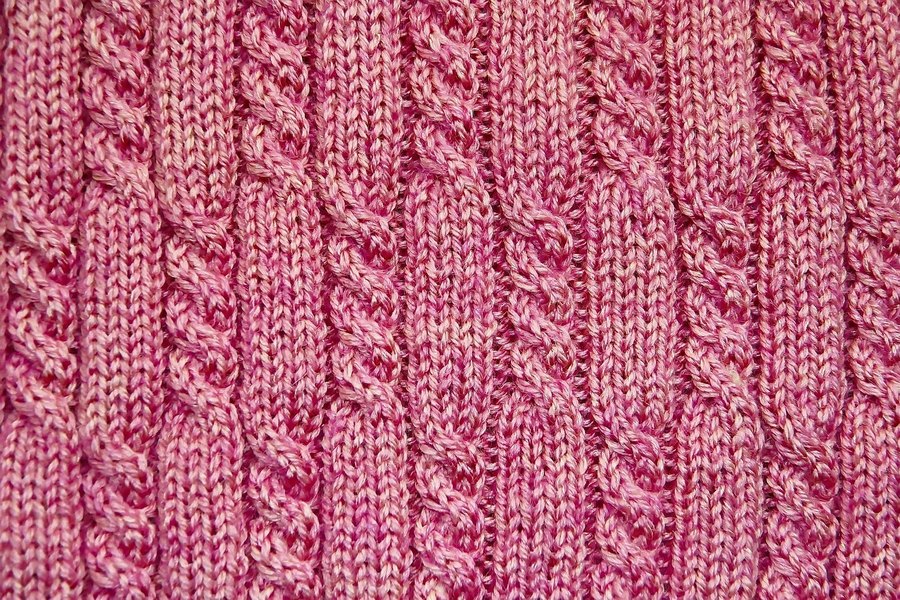
Stitch structure can override gauge. A 7-gauge rib behaves stiffer than a 7-gauge jersey because the stitches fold over each other, which is why a ribbed 7-gauge cardigan reads as outerwear while a jersey crew of the same yarn reads as a sweater.
Needles per inch against pilling
Pilling is short fibers escaping the yarn, tangling on the surface and forming a ball. Two things govern it: how firmly the yarn holds its fibers, which depends on staple length, twist and ply, and how much abrasion the surface takes.
Gauge acts on the second. In a coarse stitch the crowns of the loops stand proud, so a few high points take all the rubbing from a bag strap or a jacket lining. A tight gauge presents a flatter surface and spreads the load, so fewer fibers work loose per wear.
Tighter gauge is therefore better for pilling, all else equal, and all else is rarely equal: a 14-gauge soft-spun cashmere can pill faster than a 7-gauge tightly twisted lambswool. Gauge narrows the odds without settling them. Fiber length and pilling covers the other half of the question.
The four numbers, and what each one buys
| Gauge | Needle spacing | Cloth | Drape | Warmth alone | Watch for |
|---|---|---|---|---|---|
| 3gg | 8.5 mm | Very thick, visible stitches | Stands away from the body | High in still air, low in wind | Weight on the shoulders; pilling at rub points |
| 7gg | 3.6 mm | Thick, clear stitch definition | Holds its own shape | Moderate | Too bulky under a slim jacket |
| 12gg | 2.1 mm | Fine, smooth surface | Follows the body, tucks | Low to moderate | Bags at the elbow if the yarn is soft |
| 14gg | 1.8 mm | Thin, close to a heavy shirt | Clings at the shoulder | Low | Cuffs and elbows wear first |
| 18gg | 1.4 mm | Ultrafine, slight sheen | Drapes like jersey | Minimal | Sheerness in pale colors |
The consequences run in a line. Three gauge is a jacket substitute: heavy, shape-carrying, and impossible under a coat because the armhole will not take it. Seven gauge is the workhorse: it holds shape over a shirt, wears alone indoors, and fights a tailored shoulder. Twelve gauge is the layering gauge: it tucks, it disappears under a blazer, and it provides a layer rather than insulation. Fourteen and above is next-to-skin: dressy, fine, and dependent on something else for warmth.
Gauge is not weight, and neither is ply
Weight is grams per square meter and gauge is needles per inch, and the two move independently. A 12-gauge cloth can be tight or open, from a heavy yarn or a light one; a 12-gauge lambswool and a 12-gauge cashmere can differ substantially in weight at the same gauge.
Ply sits on top of that. A 2-ply yarn is two singles twisted together, written as 2/28 for two 28-count singles, and the twist is what binds fibers and resists pilling. The label is also used loosely to mean two ends knitted together, which adds thickness without adding twist, so it feels softer and pills sooner.
Gauge sets the scale; the other numbers set the behavior. A tightly twisted two-ply at 12 gauge feels firm and wears slowly. A lofty single at the same gauge carries a halo and pills at the cuff. Both are 12gg, and neither is lying.
Choosing by layer
Under a jacket, 12 gauge or finer: it adds warmth without adding bulk at the armhole. To replace a jacket, 7 gauge or coarser. Next to skin, 14 and above. Gauge at a desk works the 7-to-12 decision in an office where the jacket is on and off all day.
Cold weather reverses the intuition. A thin knit under a shell usually beats a chunky sweater, because the shell stops the air moving and the fine knit traps a layer close to the body, which is the calculation behind cold-weather weights. The chunky sweater is for the room, not the street.
The cost of getting it wrong is specific. A 12-gauge bought for warmth returns a garment that needs a coat over it; a 3-gauge bought for layering returns one that fits under nothing. Gauge does not rank quality. It predicts which of those purchases you are making.
Frequently asked
- Is a higher gauge always better?
- No. Gauge sets the scale of the stitch and the range of yarns a machine can knit. A 14-gauge cashmere crewneck and a 3-gauge lambswool cardigan do different jobs; the fine one layers under a jacket, the coarse one replaces it.
- Can two 12-gauge sweaters feel different?
- Yes. The same gauge can carry different yarn counts, plies and stitch structures. A tightly twisted two-ply at 12 gauge feels firmer and pills less than a lofty single at the same gauge, even though both labels say 12gg.
- What does 2-ply mean on a knit label?
- Two yarns twisted together before knitting. Ply adds roundness, strength and resistance to pilling, and it is separate from gauge: a 12-gauge sweater can be knitted from one ply or from two.