The office · Workwear
Knit Gauge at a Desk: Fine Gauge, Rib and the Chunky Problem
A 12-gauge knit sits under a jacket like a shirt; a 7-gauge one does not. Gauge, rib and yarn weight decide which knit belongs at a desk.

A 12-gauge sweater and a 3-gauge sweater can share a fiber, a color and a price and behave nothing alike in an office. One sits under a jacket the way a shirt does. The other pushes the lapels off the chest and reads as outerwear indoors. Gauge is the number that predicts which, and it is also the number brands most often leave off the label.
Gauge counts needles per inch
On a flat knitting machine, gauge counts needles per inch of needle bed. A 12-gauge machine has 12 needles per inch and draws fine yarn through them; a 7-gauge has 7 and lays down roughly twice the yarn per stitch, so the fabric is thicker and each stitch larger. A 3-gauge is hand-knit scale, with stitches you can count from across a room.
The number describes the machine, not the yarn and not the quality. A 14-gauge sweater made from short, loosely twisted fiber can pill within a month, while a 5-gauge one built from long fiber can last a decade. What gauge does and does not tell you is worth separating before the number is used as a proxy for anything except thickness.
Counting gauge on a sweater you already own
Labels omit gauge often enough that counting stitches is the practical skill. Lay the sweater flat without stretching it, place a ruler across the middle of the chest, and count the V shapes over 2 inches; divide by two for stitches per inch. A 12-gauge jersey usually lands at 7 to 9 stitches per inch, a 7-gauge at 4 to 5, a 3-gauge at 2.5 to 3.
Measure the body, not a ribbed hem or cuff, where the stitch is drawn in and the count nearly doubles. Measure again after a wash and flat dry, because a knit that has been through a hot dryer has felted and the count will have risen without the gauge changing. Gauge per inch belongs to the machine; stitch density after care belongs to the yarn.
12 to 14 gauge is the shirt substitute
A 12-gauge merino or cashmere crew weighs roughly 250 to 350 grams and adds about an eighth of an inch at the shoulder. That is thin enough to sit under a jacket with 2 inches of chest ease without disturbing the lapel roll. The test is physical: put the jacket on over the knit, button it, and look at the top button. A lapel that stands away from the chest means the knit is taking space the jacket was cut to use elsewhere.
Three details decide whether a fine knit works in that role. The collar should sit close to the neck, since a slack neckline shows under a jacket and reads as underwear. The sleeve should end at the wrist bone, so the cuff does not bunch inside the jacket sleeve. And the hem should be ribbed, so it stays put tucked or sits flat untucked. Fine gauge over a collared shirt is the other reliable office combination, provided the collar and shoulder are chosen together.
7 gauge is outerwear that sometimes fits underneath
At 7 gauge the fabric is roughly twice as thick as 12. Under a tailored jacket it adds a quarter to half an inch at the chest and shoulder, pushes the lapel away from the body, and restricts arm movement enough to notice while typing. Worn alone or under a coat it is the most useful cold-office weight there is.
Under a jacket it needs room that most jackets do not have: one size up in the chest, or a soft shoulder that gives at the seam. If neither is available, the honest answer is that the sweater and the jacket are separate outfits rather than a layered one.
Rib, jersey and identical measurements
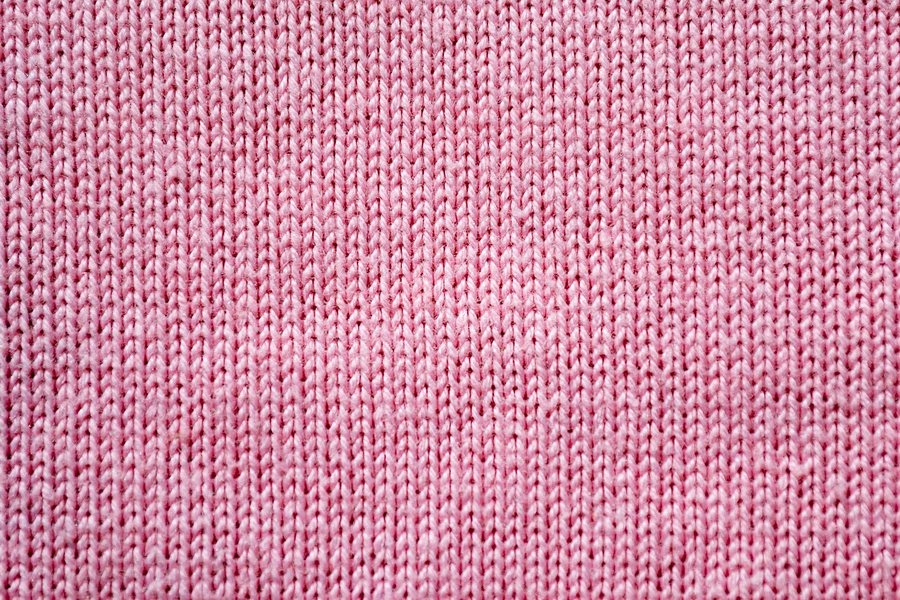
Rib knits contract to roughly 60 to 70 percent of their flat width and stretch back. A 1x1 or 2x2 ribbed crew on a 12-gauge machine therefore fits closer than a jersey knit carrying the same chest measurement, which is usually an advantage under a jacket and a disadvantage worn alone over a shirt.
Rib also recovers. A ribbed cuff and hem return to shape after a day at a desk; a jersey hem stretches and stays stretched. The difference between rib and jersey recovery explains most of the divergence in how two sweaters with identical measurements look after two seasons, and none of it is visible on the label at the till.
The chunky problem
Below 7 gauge the layering arithmetic stops working. A 3-gauge sweater can weigh 600 to 900 grams, adds bulk at the armhole, and cannot be layered under anything tailored without the jacket losing its shape at the shoulder. It is a coat substitute, not a desk garment, and no amount of sizing up converts it into one.
If the office is cold and a jacket is part of the dress code, the warmer option is a 12-gauge knit over a thin base layer, not a 3-gauge sweater worn instead of the jacket. The fine knit holds the jacket’s line; the chunky one replaces it. Where cold is the main problem and the jacket is optional, the weights that carry real warmth are the ones to compare.
Where gauge stops predicting behavior
Gauge predicts thickness reliably and behavior less so. Brushed yarns, alpaca and blown yarns produce a fabric that looks chunky at 7 gauge but weighs less than a dense 12. A loose twist at any gauge will stretch under its own weight on a hanger, so a 14-gauge sweater can grow an inch or two through the body over a winter.
Drop-shoulder construction changes the fit without changing the gauge, since the shoulder line sits off the joint and the sleeve head is cut wider. And a garment labeled 12-gauge but knitted at low tension can measure like a 10. Treat gauge as the opening number, then check stitch count and weight in grams before deciding what the sweater can do.
What to read when gauge is missing
Ply and yarn count are printed more often than gauge. A 2/28 or 2/30 Nm yarn indicates a fine two-ply yarn that usually points to 12 gauge or finer; a 2/2 Nm yarn suggests a chunky. Garment weight in grams is the most honest substitute: under 350 grams for a crew neck means fine gauge, 500 and above means it will not layer.
Fiber content and price say nothing about gauge. A cashmere crew at four times the price of a merino one can be the same 12 gauge and the same thickness, with the difference sitting in fiber length, twist and hand rather than in stitch count.
Frequently asked
- What does 12-gauge mean on a sweater label?
- The knitting machine has 12 needles per inch of needle bed, which produces fine stitches and a thin fabric. A 12-gauge merino crew usually weighs 250 to 350 grams and layers under a jacket without changing its line.
- Can a chunky sweater be worn under a blazer?
- Only with a jacket cut with extra room, and even then it pushes the lapel away from the chest. A 7-gauge knit adds roughly a quarter to half an inch at the shoulder; a 3-gauge one adds more than most jackets can absorb.
- Does a higher gauge mean better quality?
- No. Gauge describes thickness, not quality. A 3-gauge sweater can be excellent and a 14-gauge one can pill within a month, because pilling depends on fibre length and yarn twist rather than stitch count.