The formula · Outfit Formulas
Tee, Blazer, Trousers: The Default Formula and Its Ease Numbers
The tee, blazer and trousers formula described in numbers: chest ease, shoulder width, sleeve length and trouser rise instead of the phrase smart casual.
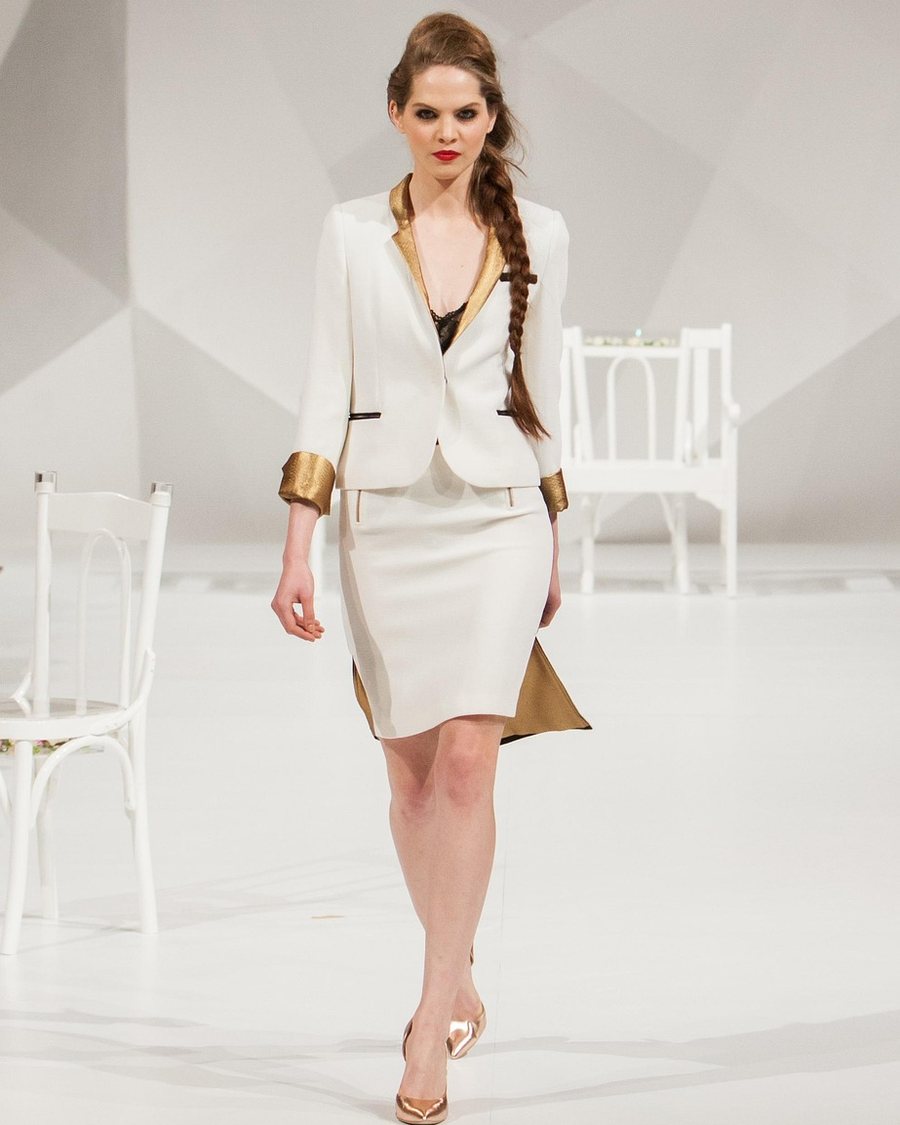
A tee, a blazer and a pair of trousers is the most repeated combination in womenswear and the least specified. “Smart casual” describes the intention and none of the fit. The outfit holds or fails at the shoulder and the waistband, and both are decided by numbers, not by a dress code.
Why the combination repeats
Three pieces, three jobs. The tee gives a plain surface at the neck and a hem that can be tucked or left out. The blazer gives a shoulder line, which is the only part of the outfit that cannot be adjusted after purchase without a tailor. The trouser gives a vertical, and the width of that vertical decides everything above it.
Nothing in the combination depends on a print, a trend or a season, which is why it survives while the pieces around it change. The failure mode is equally stable. A blazer bought to close over a shirt bows at the lapel over a tee; a tee bought for a low-rise trouser bunches under a jacket that ends at the hip. Both are visible in a mirror in under a minute and both are measured in inches.
Chest ease is the number that decides the jacket
Chest ease is the jacket’s chest circumference minus the wearer’s, with the jacket buttoned and measured flat across the chest, then doubled. Over a 180-220 GSM cotton tee the working figure is about 3 inches. Over a cotton shirt with a collar stand, allow 4 inches, because the collar and placket add bulk at the front and the jacket has to close over both.
Below 2 inches, the front panels meet before the buttons do and the lapels bow outward. Above 5 inches, the shoulder seam travels past the wearer’s shoulder point and the sleeve hangs from the wrong place. The method is the same one used in reading a size chart, and it matters more than the labeled size, which varies by several inches between makers.
Ease has a vertical dimension that buyers ignore. A jacket with correct chest ease and a short body sits on the hip bone and exposes the trouser waistband at the back when the wearer sits. Body length is published less often than chest width, so measure it against a jacket that already works.
Shoulder seam, sleeve pitch and the armhole
Shoulder width is measured seam to seam across the back. On a structured jacket the seam should land within half an inch of the wearer’s shoulder point. On an unstructured jacket, with no canvas to support the sleeve head, up to an inch of overlap is tolerable; beyond that the sleeve collapses at the top. The construction differences are set out in unstructured blazer fit.
Sleeve pitch is the forward or backward rotation of the sleeve where it meets the armhole. Stand with arms hanging and look for a diagonal fold running from the shoulder toward the armpit. That fold means the armhole is set too high for the chest ease, or the pitch is rotated back, and neither is fixed by sizing up.
Sleeve length finishes 0.25 to 0.5 inch above the wrist bone, so a narrow band of tee sleeve stays visible. Check it with the tee worn, because a heavier tee lifts the jacket and moves the cuff.
Trouser rise decides the tee hem
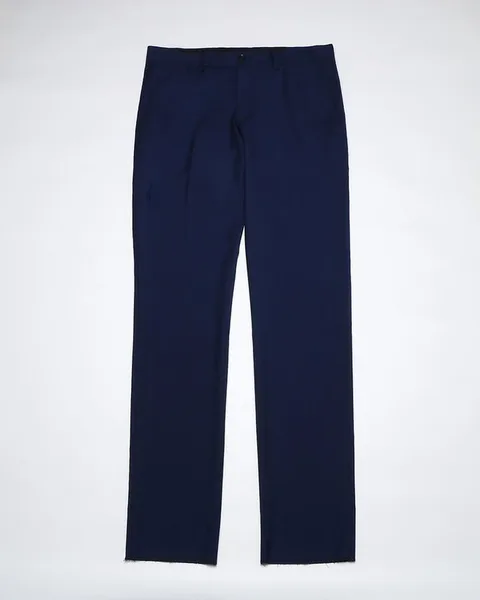
A 10- to 11-inch front rise puts the waistband at or just above the navel and holds a tucked tee without a belt. A 9-inch rise sits an inch lower and reads more casual, which suits an untucked tee better. Rise runs from the crotch seam to the top edge of the waistband, band included; leaving the band out understates the figure by about 1.5 inches on a standard trouser.
The hem question follows. A tee needs about 2 inches of length below the waistband to tuck flat, and a tee that stops 1 to 2 inches above the waistband should stay out. Between those positions is the awkward zone where a tee is long enough to tuck but short enough to pull free when an arm goes up. Those cases are covered in tuck or untuck.
Leg opening closes the proportion
Leg opening is the last number because it is the one the jacket has to answer to. Measured flat across the hem, a straight trouser at 7.5 to 8.5 inches balances a jacket that ends at the hip bone. Wider than 9 inches and the jacket needs to be longer, or the outfit reads top-heavy regardless of fit.
The relationship is geometric: a wide hem puts weight at the bottom, a short jacket puts it at the top, and the eye needs one to dominate. When both are broad the outfit becomes a rectangle; when both are narrow, a column. Neither is wrong, but only one can be chosen per outfit.
Three ways it fails, and what each costs
The first is the lapel bow, caused by chest ease under 2 inches. It cannot be tailored out, because the fix is a larger front panel, so the cost is a replacement jacket.
The second is the shoulder overhang, caused by buying for the chest and ignoring the shoulder. A tailor can narrow a shoulder by a limited amount, and the operation moves the sleeve head, which changes the pitch. On an inexpensive jacket the alteration often costs more than the garment is worth, which is why alterations have a break-even point.
The third is the bunching tee, caused by too much body width under a fitted jacket. This one is cheap to fix and easy to misdiagnose: the instinct is to blame the jacket, but a boxy tee under a suppressed jacket gathers at the armhole whatever the jacket does. The alternatives are a closer-cut tee or a looser jacket, and only one of those requires a purchase.
The numbers to record before ordering
| Measurement | How to take it | Working figure |
|---|---|---|
| Chest ease | Jacket flat across chest, doubled, minus body | 3 in over a tee |
| Shoulder width | Seam to seam across the back | Within 0.5 in of shoulder point |
| Sleeve length | Shoulder seam to cuff | 0.25-0.5 in above wrist bone |
| Front rise | Crotch seam to waistband top | 10-11 in for a tucked tee |
| Leg opening | Flat across hem | 7.5-8.5 in for a hip-length jacket |
The figures are ranges because bodies are: a 10-inch rise sits lower on a tall frame than a short one, and 3 inches of ease on a 34-inch chest is not the same proportion as 3 inches on a 42-inch chest. What transfers is the method, not the number.
When the blazer is the wrong layer
The combination assumes a jacket with a shoulder line and a front that closes. Where the room is warm, a knit with structure does the same job: a fine-gauge cardigan or a compact merino crew gives a shoulder without a lining. Where the dress code is genuinely formal, the tee is the wrong top and a shirt changes the ease figure by an inch.
Where the budget is the constraint, the jacket is still the piece to spend on, because it is the only one that cannot be altered into fit. The tee can be replaced cheaply and the trouser can be hemmed, but a jacket with the shoulder in the wrong place is a return. Buying the jacket last spends the money once.
Frequently asked
- How much chest ease should a blazer have over a tee?
- About 3 inches, measured as the garment chest circumference minus the body chest, with the jacket buttoned and lying flat. Over a shirt, allow 4 inches. Under 2 inches the lapels bow outward; over 5 inches the shoulder line drifts past the wearer.
- Should the tee be tucked into the trousers?
- It depends on body length and rise. A tee that clears the waistband by 2 inches or more can tuck without bulk. A shorter tee that stops 1 inch above the waistband should stay out, since tucking it pulls the shoulder seam upward.
- What fabric weight stops a tee looking thin under a blazer?
- Around 180 to 220 GSM, measured to the ASTM D3776 method for mass per unit area. Below 160 GSM the neckline and any undergarment edge tend to show through a light-colored jacket in daylight, which no amount of pressing fixes.