The season · Seasonal Edits
Rain Without a Technical Shell
Wool, waxed cotton and drying time: what each non-technical coat does in an hour of rain, where it fails, and what it costs to keep it working.

A wool coat in steady rain does not fail all at once. The shoulders darken first, the cloth gains weight, and by the time the bus comes the front has pulled out of line. Waxed cotton fails differently: it sheds the surface water, then holds damp in its seams and pocket bags. Neither is waterproof. Both work in rain if you know which one you are carrying and how long it has to last.
What wool does before it wets through
Wool is hygroscopic. At ordinary indoor humidity it holds 16 to 18 percent of its weight in water without feeling damp, and Woolmark’s guidance puts the ceiling at about 30 percent before the wearer notices. Run the arithmetic on a 1.4 kilogram melton coat and that is more than 400 grams of water absorbed before the inside face feels wet. The buffer is real, and it is also the weight you carry once the coat is saturated.
How long the surface resists is a property of the weave, not the fiber. Melton is fulled: the cloth is washed and beaten until the fibers mat and the face closes, which is how a 600 to 900 GSM coating holds rain on the surface instead of passing it. A brushed flannel has a raised nap that wets and mats flat. A loose hopsack or a soft tweed has visible gaps between yarns and wets through in minutes.
There is no natural waterproofing left in a modern coat. Scouring removes the lanolin, so the performance comes from density and construction. The failure is mechanical: shoulders and upper back saturate, the coat gains several hundred grams, and the collar begins to wick at the neck.
Waxed cotton is a surface, not a fabric
Waxed cotton starts as a plain-weave cotton cloth, usually 6 to 8 ounces per square yard for a jacket, which is roughly 200 to 270 GSM, impregnated with a paraffin and beeswax blend. Water beads because the wax lowers the surface energy of the cloth; it does not soak in. The trick is a surface effect, not a fiber one.
The same film that stops water stops vapor. Breathability drops sharply, so a waxed jacket wears warmer and clammier than its weight suggests, and a fast walk to the station leaves the inside damp from the body rather than the sky. Wax is also temperature-sensitive: stiff in the cold, soft in a hot car, and prone to migrating into creases, which is why folds go pale as the coating thins.
Drying time separates the two
Wool absorbs water into the fiber, so drying is diffusion from the inside out. A coat that has wet through needs roughly 24 to 48 hours at room temperature, laid flat or over a wide hanger and reshaped while damp. A radiator felt and shrinks it, and hanging a soaked coat by the collar puts the weight of the water into the shoulder seam.
Waxed cotton is fast on the face and slow in the seams. Shake the standing water off and the surface is dry within the hour, but the cotton core, the seam thread and the pocket bags hold moisture for four to six hours more. Hang it open rather than folding it into a car, where the damp has nowhere to go.
| Coating | In rain | Dry time | Care |
|---|---|---|---|
| Dense wool melton, 600+ GSM | Holds a shower, then wets at the shoulders | 24-48 hours, flat | Brush, dry clean sparingly |
| Brushed wool flannel | Wets quickly, surface mats | 24-48 hours, flat | Brush, dry clean sparingly |
| Waxed cotton, 6-8 oz | Beads, wets along seams | 1 hour face, 4-6 hours seams | Sponge only, re-wax yearly |
| Three-layer shell | Sheds throughout | 15-30 minutes, hung | Technical wash, re-proof periodically |
Seams and needle holes fail first
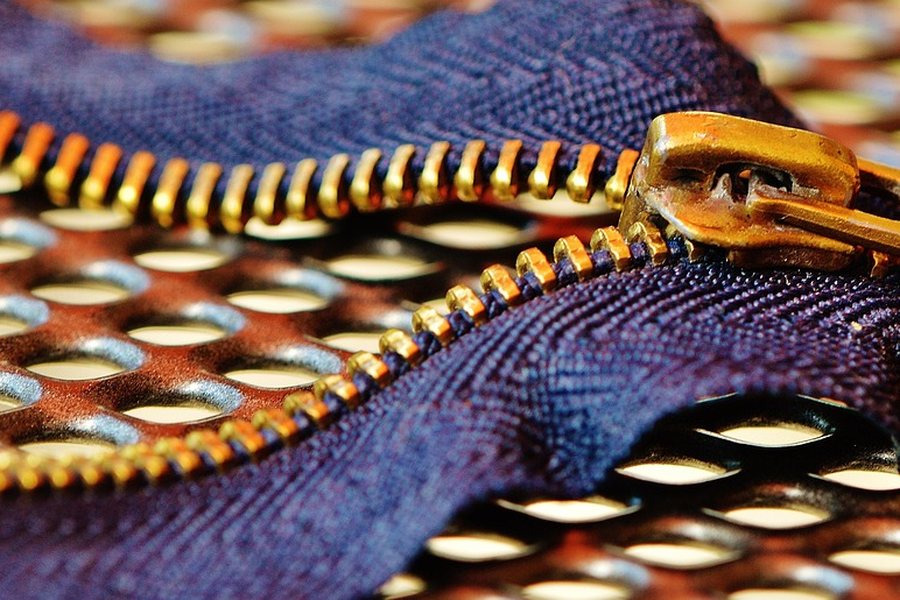
Every stitch is a perforation. On waxed cotton the needle pushes wax aside and leaves a hole that is not sealed, which is why the shoulder seam and the sleeve head wet out before the panel beside them. Tape is not the answer: seam-sealing tape needs a clean synthetic surface to bond to, and wax will not hold it. On wool the seam is where the cloth is doubled and where run-off from the collar arrives, so the same two places fail for a different reason.
Hardware matters more than buyers expect. A zip under a storm flap and a placket that overlaps by an inch shed water at the chest; an exposed zip at the same point passes it. Pocket flaps that sit flat do their job; a flap that curls at the corner funnels water into the pocket, which is how a coat ends up wet inside while the outside looks fine.
What goes underneath
Rain changes the layer order more than it changes the coat. Wool next to skin moves moisture away from the body; a cotton shirt under a wet coat stays damp and cools the torso, which is the argument in layer order between 12 and 18 degrees. Keep the middle layer thin enough that the coat still closes without strain, since a coat pulled tight at the button point pulls the closure open and lets water in at the front.
The hem matters too. A coat that stops at the widest part of the calf collects splash, and a hem within two inches of the boot top keeps spray off the sock. Coat length against height works through where those points fall on different bodies.
Reproofing is the running cost
A waxed coat is not maintenance-free, and the maintenance is the reason it survives. Re-wax once a year, or as soon as water stops beading and the surface reads matte rather than waxy. A tin of wax covers a jacket and costs a fraction of a replacement. Applied too thick it stays tacky, picks up lint and transfers to seats; warmed with a cloth and worked thin, it lasts the season.
Wool asks for less and punishes more. Brush the coat after a wet walk, air it for a day, and dry clean at most once a season, because each cycle is solvent and pressing on cloth that has a finite number of them. Both punish the obvious fix: a wool coat dried on a radiator comes back a size smaller and felted, and a waxed jacket put through a machine wash with detergent comes back with the wax stripped and the cloth patchy.
When the rain is actually heavy
Neither coat is a substitute for a shell in a downpour. A wool coat covers the walk between buildings, a waxed one covers a longer errand, and both are defeated by wind-driven rain, which pushes water through a weave rather than letting it fall on the surface. Carry an umbrella, or accept damp shoulders. A hat with a brim keeps the collar dry, and a bag under the coat keeps its contents dry.
The coat that survives a wet winter is the one dried properly afterward, not the one that cost the most: wet on Tuesday, sound on Thursday.
Frequently asked
- Can a wool coat be worn in the rain?
- A dense wool coating holds off a shower for a short walk, then wets through at the shoulders and gains weight. Wool keeps you warm while damp, which is why it works better than cotton in cold rain, but it is not waterproof and should not be treated as one.
- Does waxed cotton need re-waxing?
- Yes. The wax wears at the shoulders, cuffs and anywhere the coat folds, and the cloth begins to wet out in patches. Makers of waxed jackets generally advise reproofing once a year, or sooner if water stops beading and the surface reads matte rather than waxy.
- How long does a wet coat take to dry?
- A wool coat that has wet through needs roughly 24 to 48 hours, dried flat and away from direct heat. Waxed cotton sheds surface water within the hour, but its seams and the cotton under the wax can stay damp for four to six hours longer.