The office · Workwear
Dressing for a Room With No Written Dress Code
No written dress code is still a dress code. A calibration method: read the photographs, count the shoes, wear one notch above, adjust a single variable.

Most offices never write a dress code down, and the ones that do usually publish an aspiration rather than a description. The rules still exist; they are enforced quietly and stated never. The reliable way to find them is to treat the room as a sample: score what people wear on ordinary days, take the middle of the distribution, then move toward it in steps small enough to reverse.
A missing code is a distribution, not a rule
Where a code is published, it sets a floor and lists exceptions. Where it is not, every person resolves the question alone, and the office settles at whatever most people decided. That settlement has a mode, which is the outfit you see four times before lunch, and two tails: the people dressed for the job they want, and the people dressed for the job they had in 2019.
Newcomers sample the wrong part of it. Careers pages, interview panels and launch-day photography all sit in the upper tail, because those are the days somebody chose the room’s clothes. A written policy is a poor guide for the opposite reason: it tends to describe what is forbidden, which is the argument the office already had rather than the level it currently sits at.
The consequence is that “no dress code” is not permission. It is a narrower instruction, because the acceptable range is defined by observation rather than by text, and the penalty for missing it is social rather than procedural.
Score four slots on a four-point scale
Calibration needs a number. Four slots produce one: score the shoe, the trouser, the top and the layer from 0 to 3 each, and total to 12. The anchors below are about construction rather than style, because construction is what can be read at ten paces across a lobby.
| Slot | 0 | 1 | 2 | 3 |
|---|---|---|---|---|
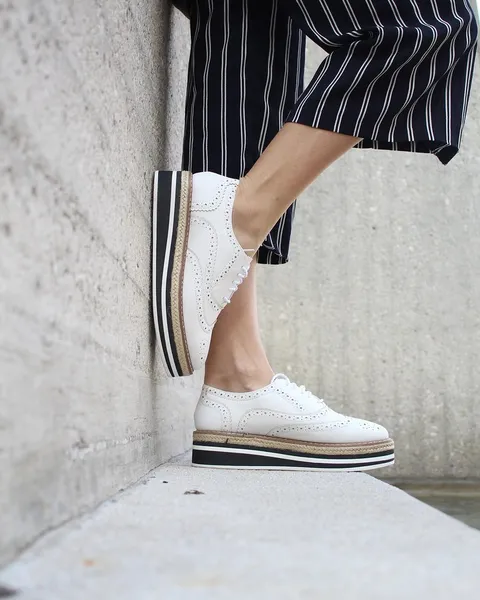
| Shoe | canvas sneaker | leather sneaker | loafer or low boot | derby, oxford, heel |
| Trouser | denim | chino | cotton or wool, uncreased | wool, creased |
| Top | graphic tee | plain tee | knit or open collar | shirt, buttoned to the neck |
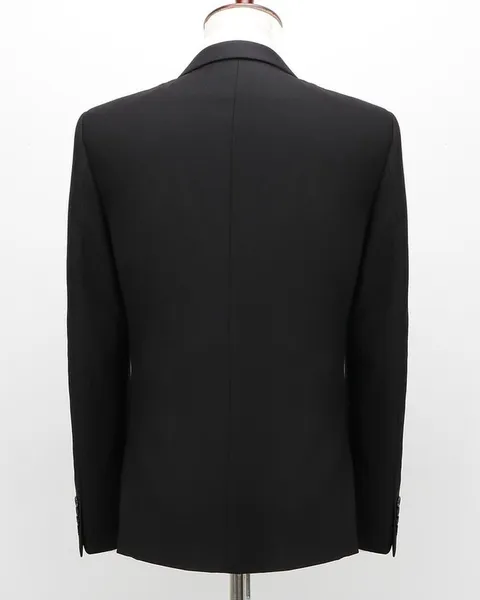
| Layer | none | quilted or fleece | unstructured jacket | structured jacket |
A room that scores 6 is a knit-and-chino floor. A room at 9 has jackets still on at half past ten. The scale earns its place because it turns disagreement into something specific: if two people score the same office four points apart, they are looking at different slots, and the argument can now be settled by recounting rather than by taste.
A sample of twenty, taken twice
Twenty people, in your role and your city, seen on two separate ordinary days. Twenty gives a median and a spread. Three gives an anecdote, and it is usually the anecdote told by whoever interviews candidates.
Two windows carry most of the information. Between 8:45 and 9:30 coats are coming off and shoes are visible before anyone has sat down. At 11:00 you can see what survived the commute and the first meeting: a jacket still being worn means tailoring is normal, a jacket over the back of a chair means it is tolerated. Exclude launch days, client-visit days and the week between Christmas and New Year, when the room is dressing for nobody.
Record slots rather than outfits, and take the median rather than the mean. One person in a three-piece suit pulls an average up and tells you nothing about the floor. If the scores arrive in two clumps, a design team at 4 and a sales floor at 10, the office does not have one code. It has two, and yours is the one attached to your team.
The shoe carries the widest range
The shoe deserves its own pass because it is the only slot that can move three points in a single swap. A change of shirt moves the register by roughly one point. The same person in a canvas sneaker and in a polished derby is reading as two different jobs.
Shoes are also the last element people abandon when a workplace dresses down, which makes them the most honest signal available. Read the shoe first, then confirm with one other slot. Leather shoes with creased trousers mean the room is formal and the knit is a concession. Leather shoes with denim mean the code is being applied unevenly, and the safe position is the one held by whoever signs your expenses.
Day one at median plus one
Dress one notch above the median, not two. On the 12-point scale that is a single slot, and the practical version is a cotton shirt or a 12-gauge knit, a trouser with a front crease, and a leather shoe with a rubber sole. The four-slot method keeps the decision to four items, made once, before you leave the house.
The jacket is what makes the method work. It is the only slot that can be removed in a corridor without looking like you are changing, which converts an overshoot into a correction in about four seconds. Nothing logoed, nothing that needs explaining, nothing that requires a change of gait or a hand held at the collar all day.
Coming down one variable a week
Descend in a fixed order: shoe, then layer, then top, then bottom. Shoes go first because they are the least remarked on and the cheapest to reverse; the bottom goes last because trouser formality is the hardest thing to disguise once it has been removed. One variable a week leaves you a comparison. Changing everything at once removes the reference point and reads as a statement.
The stopping rule is two consecutive weeks with no remark and no self-consciousness. Remarks are a poor instrument, since colleagues comment on change rather than on level, so treat a comment as evidence that something moved, not as evidence that it moved too far.
Keep one pair of shoes at the desk. It costs nothing, and it turns the first month from a commitment into an option.
Where calibration stops working
Client-facing roles break the method, because the room you are calibrated to is not the room you are standing in. Calibrate to the client’s floor and keep a jacket at your own office for the days you come back into it.
A bimodal office breaks it differently. If two groups dress four points apart there is no median to hit; pick the mode of the group that reviews your work and accept that you will read as slightly formal to the other one.
Hybrid weeks break the sample entirely. On a video call the visible slots are the collar, the shoulder and the layer, and the frame crops the rest, so a knit and a jacket look identical to everyone on the other end. Dress the top two slots to the screen and stop spending on the bottom two.
The method also fails in the first month at a company where most people are new. A new team has no mode yet, only an average of everybody’s last job. Dress to the most formal person who is staying.
What a misread costs
Overdressing costs less than underdressing, but it is not free. Two notches up reads as a candidate on day one and as a commentary by week six, and the correction is more visible than the original error was. One notch down reads as a verdict on the room and cannot be recovered with a jacket.
The expensive mistake is buying for the sample before taking it: a suit for a floor that wears knits, or a second pair of sneakers for a floor that wears loafers. Either costs a full purchase rather than an alteration, and the alteration arithmetic only helps once you own something close. It cannot rescue a garment bought for the wrong room. If the first week goes wrong, change the shoe before anything else, because it is the one slot you can correct on the way in.
Frequently asked
- What should I wear on a first day with no dress code?
- The middle-formal version of the four slots, with a jacket you can remove. Trousers with a crease, a fine-gauge knit or cotton shirt, and a leather shoe with a rubber sole. Then watch the room rather than the policy.
- How many people do I need to observe?
- About twenty, in your role and your city, on two ordinary days. Twenty gives you a median and a spread; three gives you an anecdote, usually from the person who interviews candidates. Exclude launch days and client visits.
- How fast should I change what I wear?
- One variable a week: the shoe, then the jacket, then the shirt. Changing everything at once removes your reference point, and colleagues read a sudden shift as a statement rather than a calibration.